How to Talk About Projects You Haven't Shipped Yet

Every software engineer has a graveyard of side projects: a custom caching layer sitting half-written in a private GitHub branch, a distributed task queue paused because life got busy, or a SaaS dashboard that works flawlessly on localhost:3000 but never made it to production.
When you walk into a technical interview, conventional wisdom tells you to hide these half-finished builds and only present spotless, production-deployed web apps. If you are preparing with junior developer interview questions and real examples or transitioning through a bootcamp to first dev job interview survival guide, that advice feels suffocating.
Here is the reality senior engineering managers know: a deployed CRUD clone proves you can follow a tutorial, but an ambitious unfinished project reveals how you actually solve complex engineering problems.
Interviewers do not hire side projects; they hire the engineer who designs them. When you understand what interviewers actually look for, an un-shipped project transforms from a source of shame into your strongest technical talking point.
In this guide, you will master how to talk about projects you havent shipped yet in tech interviews, turn incomplete codebases into evidence of deep technical judgment, and use a battle-tested storytelling framework that wows hiring committees.
Why Unshipped Projects Are Goldmines for Technical Interviews
When early-career candidates prepare their portfolios, they often assume interviewers grade projects like app store reviewers: Is it live? Does the payment button work? Is the UI polished?
In reality, engineering scorecards focus on technical depth, decision-making maturity, and honesty under questioning.
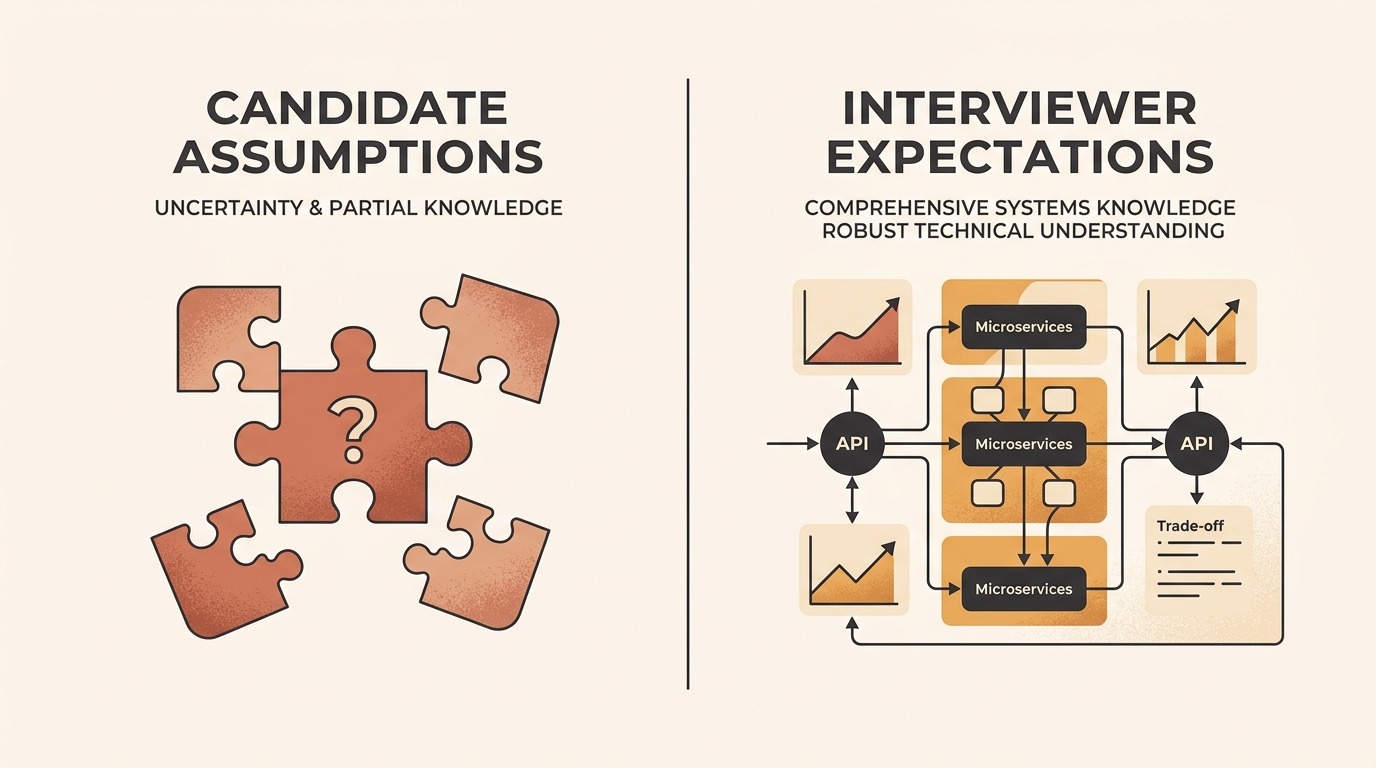
What Interviewers Actually Evaluate
- System Architecture Over Surface UI: Can you explain why you picked PostgreSQL over MongoDB, or why you needed a write-ahead log?
- Trade-Off Awareness: Did you make deliberate architectural sacrifices regarding latency, consistency, or developer ergonomics?
- Debugging and Troubleshooting Resilience: What broke when you hit scale, and how did you isolate the bottleneck?
- Honesty and Self-Awareness: Are you comfortable discussing limitations, or do you pretend everything is perfect?
If you get stuck or hit unfamiliar ground during the conversation, adopting the techniques from when you don't know the answer during an interview helps you maintain poise and demonstrate analytical thinking.
The 4-Phase WIP Storytelling Framework
To narrate an unfinished project effectively, you need structure. Avoid meandering through commit histories or making excuses for why the project remains unreleased. Instead, structure your explanation around the 4-Phase WIP (Work-In-Progress) Framework.
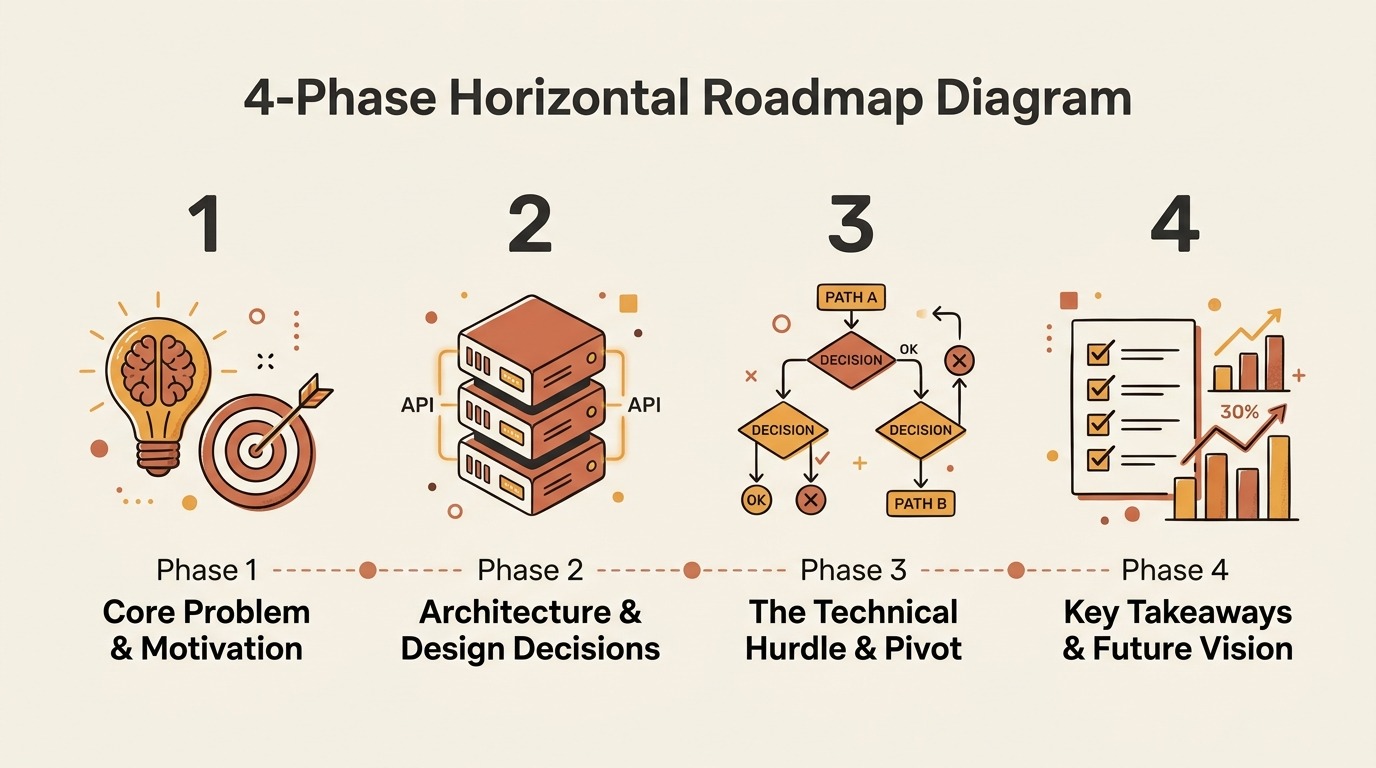
1. Problem Formulation & Architectural Intent
Start by establishing the core engineering problem you set out to explore. The goal is to show that the project was driven by curiosity and architectural exploration rather than a generic boilerplate starter.
- Formula: "I wanted to understand how [System/Algorithm] handles [Specific Technical Challenge], so I started building [Project Name] to benchmark [Key Metric]."
- Example: "I wanted to understand how event-driven pub/sub systems handle backpressure during traffic bursts, so I built a lightweight message broker in Go using custom TCP sockets."
2. Concrete Implementation & Technology Decisions
Walk the interviewer through the core components you successfully designed and implemented. Focus on data models, API contracts, and concurrency mechanisms.
// Example snippet: Illustrating custom ring-buffer queue design
type MessageBroker struct {
    topic       string
    ringBuffer  chan []byte
    subscribers []net.Conn
    mu          sync.RWMutex
}

func (mb *MessageBroker) Publish(payload []byte) error {
    select {
    case mb.ringBuffer <- payload:
        return nil
    default:
        // Deliberate trade-off: Drop on buffer saturation vs. blocking callers
        return ErrBufferFull
    }
}
When discussing this snippet, explain why you chose channel buffering over mutex locks, how you handled subscriber disconnects, and why you preferred Go's goroutines over OS-level worker threads.
3. The Technical Hurdle & Calculated Pivot
Every unfinished project stopped for a reason. Great candidates highlight the exact architectural challenge that prompted a deeper investigation or caused them to pause.
- Explain the Bottleneck: "When running stress tests with 10,000 concurrent client connections, I hit high memory allocations due to dynamic heap escaping in JSON deserialization."
- Share What You Discovered: "Profile analysis via
pprofshowed that switching to protocol buffers or zero-copy byte buffers reduced memory overhead by 65%." - Explain Why You Paused: "Once I isolated the bottleneck and proved the performance differential, I achieved the core learning objective for that prototype."
4. Retrospective Insights & Production Roadmap
Conclude by outlining the exact steps required to make the prototype production-ready. This signals strong engineering foresight and system design interview guide readiness.
- How you would structure CI/CD pipelines and deployment containerization.
- Monitoring, health check probes, and distributed tracing via OpenTelemetry.
- Data persistence layers and failure recovery strategies.
Good vs. Bad Interview Transcripts: How to Frame Incomplete Code
The difference between getting an offer and being rejected often comes down to word choice. Similar to how to explain a gap in your resume during tech interviews, framing dictates whether an interviewer sees technical depth or lack of discipline.
The Apologetic Pitch (What Fails)
"Well, I started this e-commerce app a few months ago, but it’s not really finished because I got busy with classes. The payment processing doesn't work and the frontend is broken, so please don't look too closely at the live demo."
Why this fails: It invites the interviewer to focus on flaws, highlights poor time management, and treats the conversation as a graded homework assignment.
The Engineering Post-Mortem (What Passes)
"I built a distributed inventory reservation prototype to explore optimistic versus pessimistic database locking under high-concurrency flash sale conditions. I implemented the core transactional logic in PostgreSQL and FastAPI with comprehensive integration tests.
I intentionally paused before building out the React storefront because my primary objective was stress-testing deadlocks and isolation levels under simulated load. Through that process, I learned how PostgreSQL advisory locks prevent race conditions without table-level serialization bottlenecks."
Why this passes: It establishes technical intent, explains deliberate scope constraints, and highlights tangible engineering lessons learned.
If you find that your previous technical interviews ended without clear reasons, reviewing why you're not getting callbacks after technical interviews will help you pinpoint communication blindspots.
How to Present Unfinished Projects on Your Resume and Portfolio
You can include un-shipped projects on your resume, LinkedIn, and GitHub as long as you document them with clear engineering context.
Structuring Your GitHub Repository for WIP Projects
Do not leave a default create-react-app README on an experimental repository. A high-signal repository for an uncompleted build should contain:
- Architecture Overview: A clear Mermaid or ASCII diagram illustrating components, API boundaries, and database relationships.
- Current State & Key Modules: Explicit list of what is functional (e.g.,
Core Auth Engine: 100%,Rate Limiting Middleware: Complete). - Benchmarking Results: Benchmark scripts, latency graphs, or profiling summaries.
- Known Limitations & Next Steps: A bulleted backlog of architectural enhancements.
Bullet Point Formats for Unfinished Work
When listing the project on your resume, write action-driven bullet points that emphasize technical achievements:
- Engineered a distributed task scheduler in Go utilizing Redis streams and sorted sets to manage priority queues across 4 worker nodes.
- Benchmarked transactional throughput comparing pessimistic row-locking against Redis-backed distributed locks under simulated concurrency.
- Implemented automated end-to-end integration tests using Docker Compose and GitHub Actions to validate message delivery guarantees.
Practice Your Project Pitch Under Realistic Pressure
Explaining complex technical architectures in high-stakes interviews requires fluid communication and structured delivery. If you fumble your explanation or ramble through edge cases, you risk obscuring your hard-earned engineering insights.
With totop.app, you can conduct realistic AI mock interviews tailored directly to your target role and tech stack. The AI interviewer asks probing follow-up questions about your system architecture, challenges your trade-off choices, and provides real-time scoring on technical clarity, structured communication, and depth.
Practice articulating your side projects, master your technical storytelling, and head into your next interview with complete confidence.