System Design Interview: Everything You Need to Know
Let's get this out of the way: the system design interview is the round that keeps people up at night. And honestly? It makes sense. There's no single "correct" answer, no green checkmark telling you that you nailed it. It's messy, it's open-ended, and it can feel like you're being asked to architect Google on a whiteboard in 45 minutes.
But here's what nobody tells you — you don't need to memorize architectures. You need to think out loud and make smart trade-offs. That's it. That's the whole game. Interviewers aren't grading you on whether you picked Redis or Memcached. They want to see how you reason through the chaos.
So let's break it all down. Whether you're prepping for your first system design round or your fifth, this is the stuff that actually matters.
The Foundations (Get These Right or Go Home)
Before we get into the fancy modern stuff, let's talk about the building blocks. These concepts show up in literally every system design question, so you need them locked in.
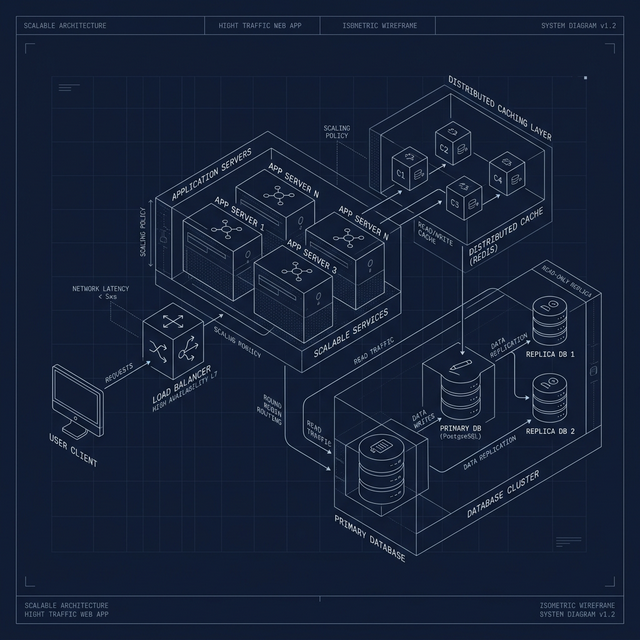
Load Balancing
Think of load balancers as traffic cops for your servers. Without them, one poor server gets hammered while the others sit idle.
- Layer 4 vs Layer 7 — Layer 4 operates at the transport level (IP + port) and is blazing fast but kind of dumb. Layer 7 works at the application level and can make smarter routing decisions based on headers, cookies, or even the URL path. Most real-world setups use both.
- Consistent Hashing — This one comes up a lot. It lets you add or remove servers from a cluster without completely reshuffling which server handles which request. Super important when you're dealing with spiky traffic.
Caching
If your database is the engine, caching is the turbo. It's the single fastest way to cut latency.
- Write-through vs Write-back vs Write-around — Write-through is the safe bet (writes go to cache AND database simultaneously). Write-back is faster but riskier (writes go to cache first, database later — what if the cache crashes?). Write-around skips the cache on writes entirely, which works great for data you rarely re-read.
- The Cache Stampede — This is the one interviewers love to bring up. Picture this: a super popular cache key expires, and suddenly 10,000 requests all hit your database at the exact same time asking for the same thing. Your DB melts. Fix it with mutex locks or probabilistic early expiration. Know this cold.
Databases
- SQL vs NoSQL — It's not about which one is "better." PostgreSQL gives you ACID guarantees and strong consistency. Cassandra gives you horizontal scalability and availability. Pick the right tool for the job and explain why.
- CAP Theorem — You get to pick two out of three: Consistency, Availability, Partition Tolerance. Spoiler: network partitions will happen, so you're really choosing between consistency and availability. Be ready to explain which side your design leans toward.
- Sharding — When your database gets too big for one machine, you split it across many. Sounds simple, but picking the right shard key is an art. Get it wrong, and you end up with hot partitions and uneven load.
The Modern Stack (This Is How You Stand Out in 2026)
Knowing the fundamentals gets you in the door. But if you really want to impress, you need to speak confidently about the tools that are reshaping how we build software right now.
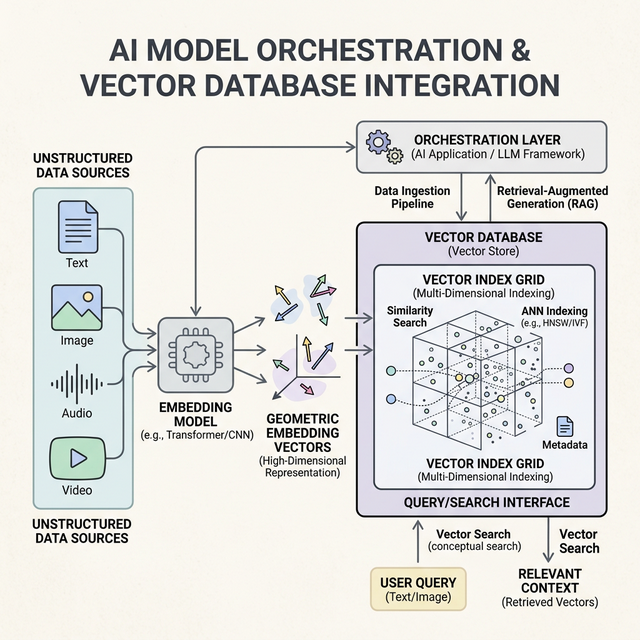
AI Model Orchestration
Every other startup is shipping LLM-powered features these days, and interviewers have noticed. If someone asks you to "design an AI chatbot at scale," you need to go deeper than "just call the OpenAI API."
- Continuous Batching — Serving LLMs efficiently means you can't just process one request at a time. Modern inference servers batch incoming tokens dynamically, squeezing way more throughput out of expensive GPU hardware.
- Streaming & Latency — LLMs are slow compared to traditional APIs. Your design needs to handle streaming responses, async processing, and potentially queuing mechanisms for when GPU capacity is maxed out.
Vector Databases
If you haven't heard of vector databases yet, now's the time. They're the backbone of every RAG (Retrieval-Augmented Generation) system out there.
- Embeddings — Unstructured data (text, images, audio) gets converted into dense numerical vectors. These vectors capture semantic meaning, so "happy" and "joyful" end up close together in vector space.
- HNSW Indexing — Searching through millions of vectors needs to be fast. HNSW (Hierarchical Navigable Small World) is the go-to indexing algorithm. Know what it does at a high level — you don't need to implement it from scratch, but you should understand the trade-off between recall accuracy and query speed.
- RAG Architectures — Combine vector search with an LLM to build systems that can answer questions grounded in your actual data, not just whatever the model hallucinated. This pattern is showing up everywhere.
Edge Functions & CDNs
The days of running everything out of us-east-1 and calling it a day are numbered.
- Edge Compute — Tools like Cloudflare Workers and Vercel Edge Functions let you run actual logic at the network edge, geographically close to your users. We're talking sub-10ms response times for personalized content.
- Edge Caching — It's not just for static assets anymore. You can cache dynamic, personalized responses at the edge with smart invalidation strategies.
The 45-Minute Framework (Your Playbook)
Knowing all the concepts above is only half the battle. The other half? Not panicking and actually structuring your time well. Here's a framework that works.
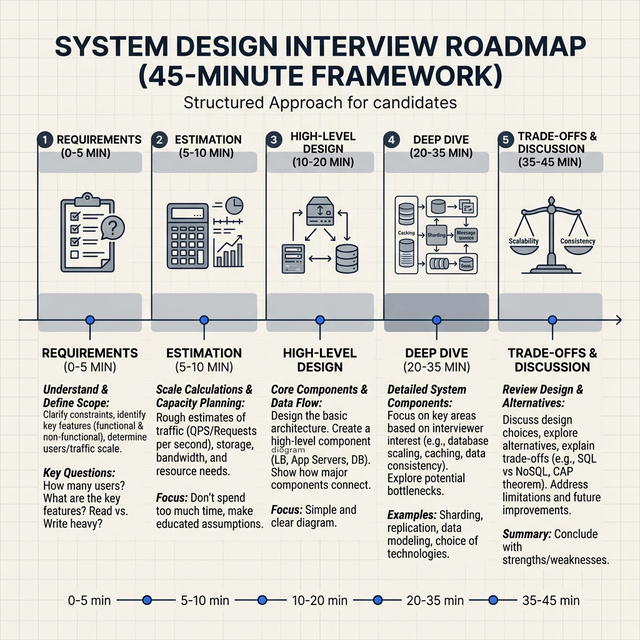
Minutes 0–5: Nail Down the Requirements
This is where most people mess up. They hear "design Twitter" and immediately start drawing databases. Don't do that. Ask questions first.
- Functional: What exactly does the system do? Can users post? Search? DM each other? What's the core feature we're designing for?
- Non-functional: What are the constraints? Are we optimizing for availability or consistency? What's the expected scale — 1,000 users or 100 million?
Five minutes of good questions saves you from redesigning everything at minute 30.
Minutes 5–10: Quick Math
Do some back-of-the-envelope estimation. It doesn't need to be perfect — it just needs to be in the right ballpark.
- How many requests per second are we expecting?
- How much storage do we need per day? Per year?
- Are we read-heavy or write-heavy? (This changes everything.)
Minutes 10–15: High-Level Sketch
Now draw. Keep it simple: client → load balancer → API gateway → services → database. Get the interviewer to nod along before you go deeper. Alignment here saves you from going down a rabbit hole they don't care about.
Minutes 15–35: Go Deep
This is the meat of the interview. Pick the hardest or most interesting part of your design and really dig in. How does the data flow? Where are the bottlenecks? What happens when a server goes down? How do you handle 10x traffic spikes?
Don't try to cover everything — go deep on one or two things rather than shallow on ten.
Minutes 35–45: Own Your Trade-offs
Wrap up by being honest about what's missing. Every design has weaknesses, and interviewers know that. Talk about what you'd add with more time — monitoring, alerting, rate limiting, better fault tolerance. This shows maturity and self-awareness.
The "Killer" Problems (Practice These)
These three problems cover a massive range of concepts. If you can handle these, you can handle almost anything they throw at you.
🎬 Designing a Global Video Streaming Service
Think Netflix, YouTube, or Disney+.
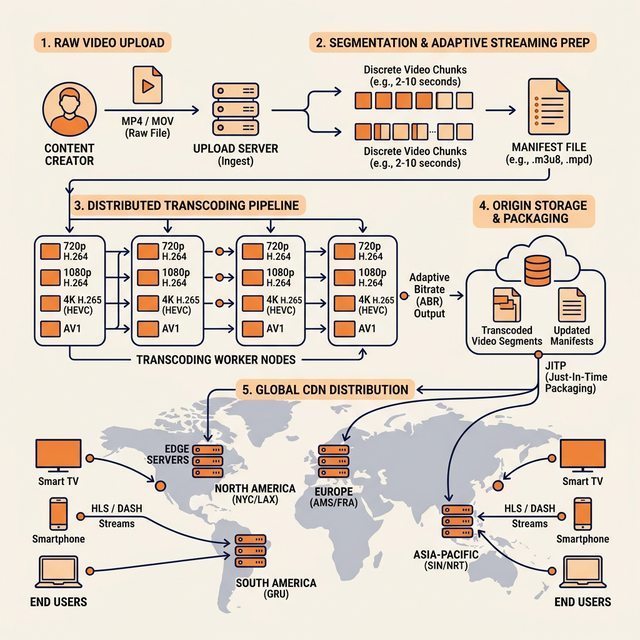
You absolutely cannot just serve raw MP4 files to millions of people around the world. Here's where to focus:
- Video Transcoding Pipeline — Raw uploads get chopped into small chunks (usually 2–10 seconds) and transcoded in parallel across worker nodes into multiple resolutions (720p, 1080p, 4K) and codecs (H.264, H.265, AV1). This is an async, compute-heavy workload — think message queues and distributed workers.
- CDN Topology — You need edge servers strategically distributed across the globe. Users in Tokyo shouldn't be streaming from a data center in Virginia. Adaptive bitrate streaming (HLS/DASH) lets the player switch quality on the fly based on bandwidth.
📝 Designing a Real-time Collaborative Editor
Think Google Docs, Notion, or Figma.
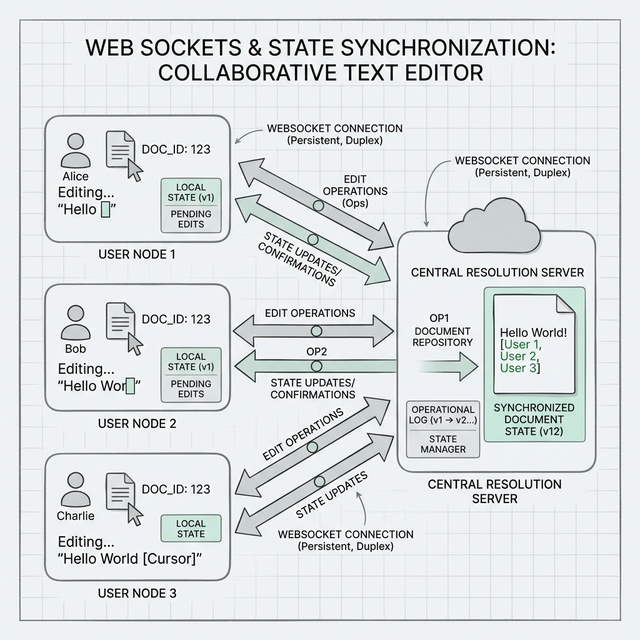
The tricky part isn't storing the document — it's handling what happens when three people edit the same paragraph at the same time.
- WebSockets — You need persistent, bidirectional connections so changes propagate in real-time. HTTP polling won't cut it here.
- Conflict Resolution — This is where it gets interesting. Look into OT (Operational Transformation) or CRDTs (Conflict-free Replicated Data Types). Both solve the "Alice types 'Hello' while Bob deletes the whole sentence" problem, just in different ways. CRDTs are newer and don't need a central server, but they're more complex to implement.
🔍 Designing an AI-Powered Search Engine
This one's becoming a favorite in interviews because it bridges old-school and modern tech.
Your design needs to combine two things: a classic inverted index (for fast, exact keyword lookup — think Elasticsearch) with a vector database (for semantic search — "show me results that mean something similar"). Layer an LLM on top to synthesize and summarize the results, and you've got yourself a modern search experience.
The key trade-off to discuss: latency. Keyword search is fast. Vector search is slower. LLM synthesis is way slower. How do you make the user experience feel snappy? (Hint: streaming, caching, and parallel execution.)
Final Thoughts
Look, the system design interview can feel overwhelming. There's a lot of surface area to cover and no way to prepare for every possible question. But here's the good news: interviewers aren't expecting perfection. They're looking for clear thinking, honest trade-off discussions, and the ability to structure a messy problem into something coherent.
Stick to the framework. Ask good questions. Go deep instead of wide. And most importantly — talk through your reasoning out loud, even when you're unsure. Silence is your enemy in this round.
You've got this. Now go build something cool on that whiteboard. 🚀