What Interviewers Actually Look For (From a Google Engineer)

If you're reading this, you probably know the drill. You grind LeetCode until your eyes bleed. You memorize the time complexities of sorting algorithms you haven't used since college. You practice system design by watching hour-long whiteboard videos on 2x speed.
And then you walk into the interview—or hop onto the Zoom call—and within five minutes, it all falls apart. You blank on a syntax issue, or you misinterpret a vague requirement, or the interviewer stares at you with an unreadable expression.
I’ve been on the other side of that table for years at Google. I’ve conducted hundreds of technical interviews, from fresh grads trying to land their first big tech role to seasoned senior engineers aiming for Staff level. I've seen brilliant coders fail, and I've seen average coders get the job because they nailed something else entirely.
The truth is, most candidates misunderstand what the interview is actually designed to measure. You think it's a test of whether you can regurgitate a specific algorithm perfectly. We think of it as a simulation: What is it like to work with you on a Tuesday afternoon when production is on fire and the requirements are poorly defined?
In this post, I want to pull back the curtain. I’m going to share the insider perspective on what interviewers actually look for, how we evaluate your performance, and why the "perfect" solution isn't always the winning one.
The Myth of the "Genius Coder"
Let's clear the air right away: we aren't looking for a lone genius who retreats into a dark cave, types furiously for an hour, and emerges with flawless, hyper-optimized code.
In fact, the "silent genius" is one of the most frustrating archetypes to interview. If you sit in silence for twenty minutes, write a perfect solution, and say, "Done," I have a major problem. I have no idea how you arrived at that solution. Did you memorize it? Did you guess? If you had hit a roadblock, would you have asked for help, or would you have silently spun your wheels for days?
Software engineering is a team sport. At companies like Google, we build massive, complex systems that require tight coordination across dozens of teams. If you can't communicate your thought process, you are a liability, no matter how good your code is.
We Are Evaluating Signal, Not Just Output
In an interview, every interaction is a data point—what we call "signal." We gather signal on several dimensions:
- Problem Solving & Analytical Skills: Can you break down a complex, ambiguous problem into manageable pieces?
- Coding & Execution: Can you translate your ideas into clean, working code?
- Communication & Collaboration: Can you explain your thoughts clearly and work with me to refine them?
- Experience & Adaptability: Have you learned from past mistakes, and can you adapt to new constraints?
Notice that "Coding" is only one piece of the puzzle. Often, candidates over-index on coding and completely bomb the communication aspect.
1. The Critical Importance of Communication
I cannot overstate this: communication is often the deciding factor in borderline cases. If you struggle slightly with the code but communicate brilliantly, you have a much better chance than someone who writes good code but communicates poorly.
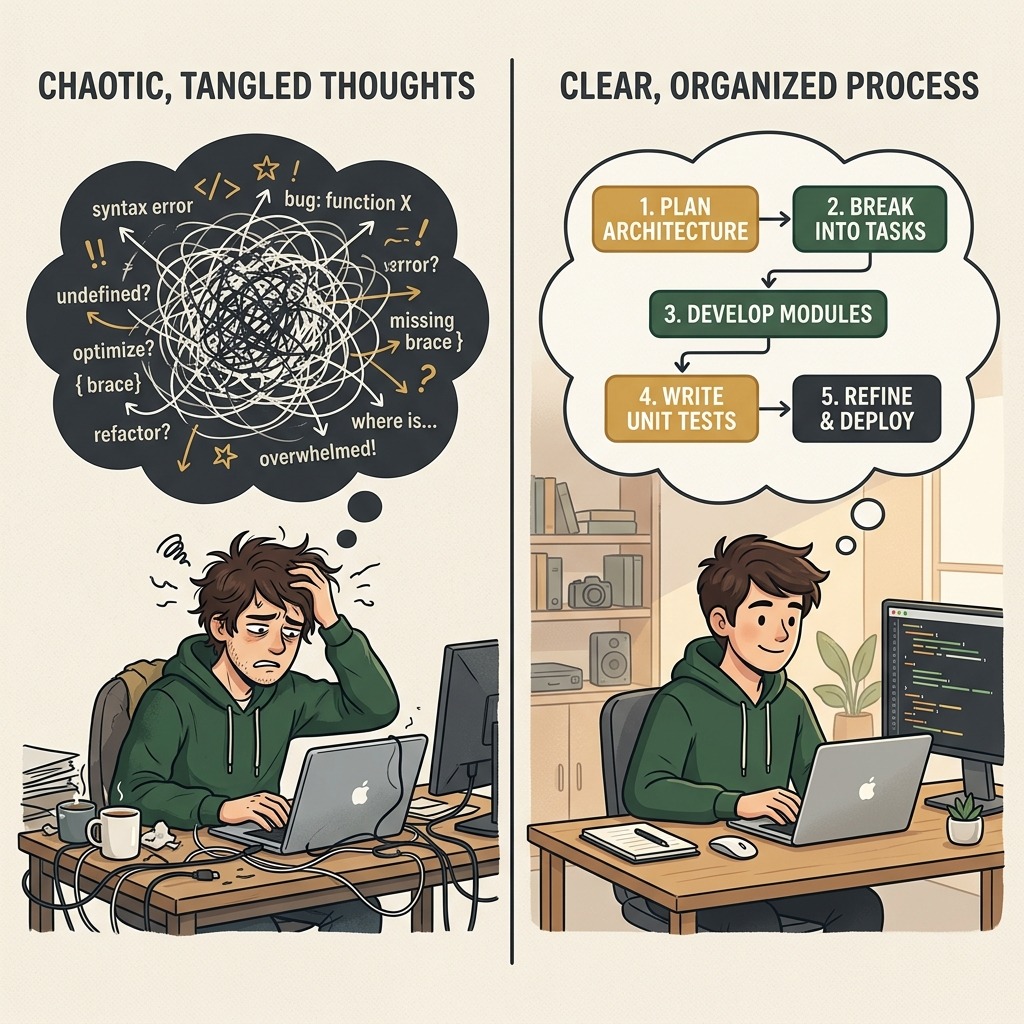
Thinking Out Loud
You need to get comfortable thinking out loud. This feels unnatural at first. When we're stuck, our instinct is to go quiet and retreat inward. You have to fight that instinct.
When I give you a problem, don't immediately start coding. Talk me through your initial reactions.
- "Okay, so it looks like we need to find the shortest path in a graph. My first instinct is to use BFS..."
- "I see a couple of edge cases here. What if the input array is empty? What if it contains negative numbers?"
- "I could do this with a brute-force nested loop, which would be O(N^2) time, but I think we can do better if we use a hash map..."
By thinking out loud, you invite the interviewer into your thought process. This does two magical things:
First, it shows me how your brain works. I can see your problem-solving framework in action.
Second, and more importantly, it allows me to help you. If you start going down a rabbit hole that I know is a dead end, I can gently steer you back. "That's an interesting approach," I might say, "but what if we considered the memory constraints?" If you're silent, I can't help you until it's too late.
The Framework for Answering Questions
When you're presented with a problem, don't just dive in. Follow a structured approach:
- Clarify: Repeat the problem back in your own words. Ask clarifying questions. Establish the bounds of the problem (e.g., "Are the numbers sorted?", "Is memory an issue?").
- Propose a Solution: Start with a naive, brute-force solution just to get something on the board. Then, discuss optimizations.
- Analyze Trade-offs: Talk about time and space complexity. "If we use a Set, we get O(1) lookups, but we increase our space complexity to O(N). Given the constraints, is that an acceptable trade-off?"
- Code: Once we agree on the approach, start coding. Keep talking as you code.
- Test: Walk through your code with a small example. Don't wait for me to point out the bug; find it yourself.
2. Navigating Ambiguity
Real-world software engineering is messy. Product managers give us incomplete specs. APIs behave unexpectedly. Requirements change halfway through a sprint.
We deliberately inject ambiguity into interview questions to see how you handle it.
If I ask you to "design a system to track popular hashtags," and you immediately start drawing database schemas without asking any questions, that's a red flag.
You should be asking:
- "What scale are we talking about? Millions of tweets a day, or billions?"
- "Do we need real-time accuracy, or is eventual consistency okay?"
- "What constitutes 'popular'? The last hour, or all time?"
Handling ambiguity shows seniority. Junior engineers take requirements at face value and build exactly what they're told. Senior engineers question the requirements, push back on assumptions, and define the scope before writing a single line of code.
3. The Art of the Hint
Here's a secret: we actually want you to succeed.
Interviewing is exhausting. If I'm doing four interviews in a day, I am desperately hoping that you are the one who crushes it so I can write a strong "Hire" recommendation and go home happy.
When you get stuck—and everyone gets stuck—I will give you a hint.
How you react to that hint is a massive signal.
- Bad reaction: You ignore the hint and keep doing what you were doing. Or, you get defensive and try to argue why your approach is better.
- Good reaction: You pause, absorb the hint, and integrate it into your thinking. "Ah, I see what you mean. If I use a two-pointer approach, I avoid the nested loop entirely. Let me try that."
Taking a hint gracefully shows that you are coachable, collaborative, and open to feedback. It mimics a real-world scenario where a colleague points out a flaw in your pull request. We want to see that you can pivot without ego.
4. Code Quality and Testing
Yes, the code matters. We want to see that you can write clean, readable, and maintainable code.
But perfect syntax is rarely the goal. In a whiteboard or shared-doc interview, I don't care if you forget a semicolon or misname a standard library function (e.g., list.push_back() vs list.append()). I care about the structure and logic.
Modularity
Are you dumping 200 lines of code into a single main function? Or are you breaking the problem down into logical, reusable helper functions? Modularity shows that you think about code organization and maintainability.
Meaningful Names
Naming variables i, j, x, and y makes your code incredibly hard to follow. Take the extra two seconds to write userIndex, currentMax, or isVisited. It shows empathy for the person reading your code (which, in the real world, is often your future self).
Proactive Testing
This is where many candidates fall short. You finish coding, look at me, and say, "I think that works."
Don't wait for me to find the edge cases. Before you declare you're finished, manually trace through your code with a test case.
- Pick a simple "happy path" input and trace the variables line by line.
- Pick an edge case (empty input, null values, massive inputs).
- If you find a bug during your own trace, that's a good thing! It shows you have a strong testing mindset. Fixing your own bug is much better than having me point it out.
5. Culture Fit vs. Culture Add
You hear a lot about "culture fit," but a better term is "culture add." We aren't looking for clones. We are looking for people who bring diverse perspectives but share our core values regarding engineering excellence, respect, and collaboration.
The "behavioral" questions aren't just filler; they are critical. When I ask, "Tell me about a time you disagreed with a coworker," I am listening closely to how you frame the story.
- Do you throw your coworker under the bus? ("They were an idiot who didn't understand my brilliant design.")
- Do you take zero responsibility?
- Or do you explain the conflict objectively, describe how you navigated the disagreement, and focus on the business outcome?
We use these questions to gauge emotional intelligence, resilience, and teamwork. Arrogance is a massive red flag. If you are brilliant but act like a jerk in the interview, I will give you a "No Hire." Life is too short to work with brilliant jerks.
How to Prepare (The Right Way)
So, how do you actually prepare for this?
- Mock Interviews: This is the most valuable thing you can do. Practice with a friend, or use a platform like totop.app to simulate real interview conditions. You need to practice talking and coding at the same time.
- Focus on Patterns, Not Problems: Don't try to memorize 500 LeetCode problems. Focus on the underlying patterns: Sliding Window, Two Pointers, Depth-First Search, Top K Elements. If you know the patterns, you can adapt to novel problems.
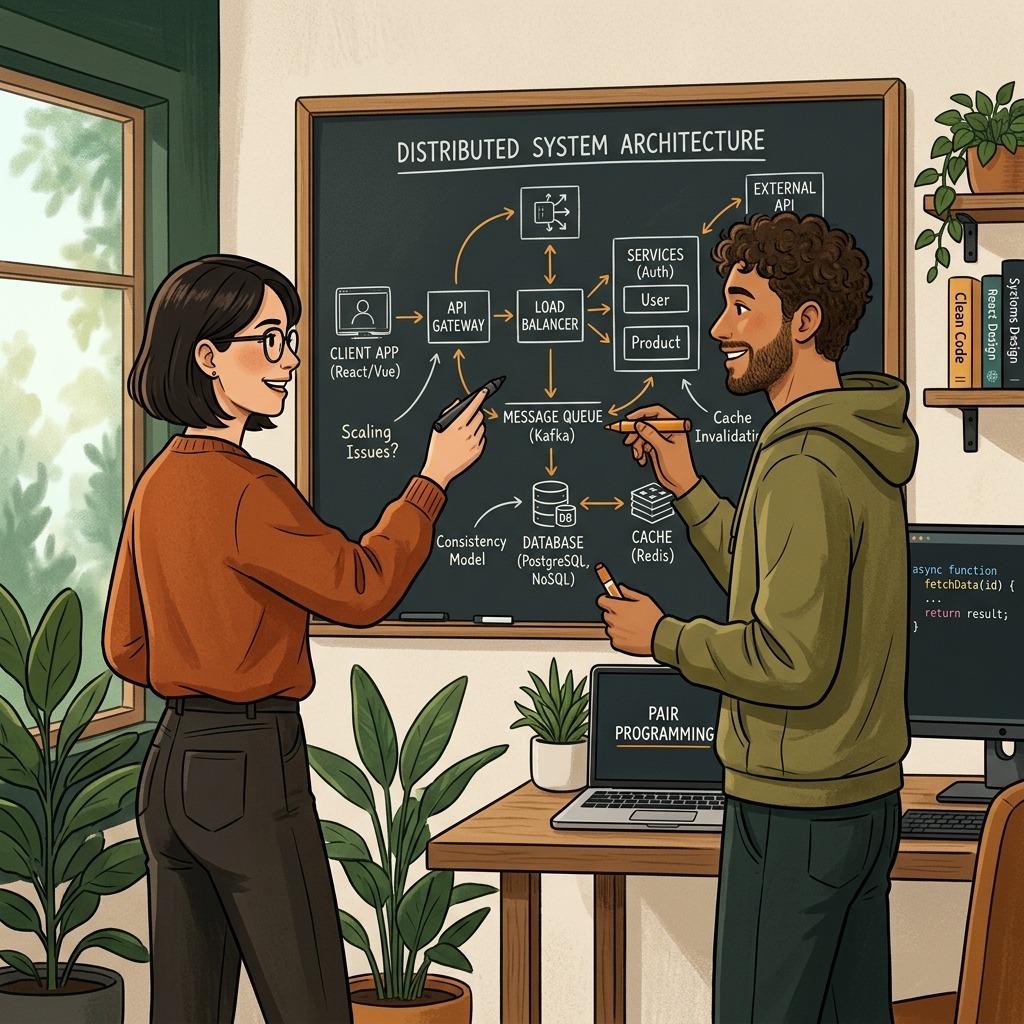
- Practice System Design Verbally: For senior roles, system design is crucial. Don't just draw boxes; practice explaining why you chose a SQL database over NoSQL, or why you put a message queue there. Articulate the trade-offs.
- Prepare Your Stories: Use the STAR method (Situation, Task, Action, Result) to prepare stories for behavioral questions. Have stories ready for: a challenging technical bug, a conflict with a teammate, a time you failed, and a time you had to learn something quickly.
- Prepare Your Reverse Interview Questions: Don't treat the final ten minutes as an afterthought. Prepare strategic questions you should ask your interviewer to evaluate engineering velocity, tech debt management, and on-call health.
- Diagnose Past Rejections: If you felt an interview went well but still faced rejection, read our guide on why you're not getting callbacks after technical interviews to isolate hidden evaluation blindspots.
- Understand Big Tech Evaluation Loops: If targeting tier-1 enterprises, study our end-to-end breakdown of the faang interview process covering bar raisers and committee calibration.
- Anticipate the AI-Native Shift: As screening processes evolve beyond whiteboard memorization, explore our breakdown of the future of technical interviews to see how evaluators are scoring AI pair-programming and real-world system debugging.
Final Thoughts
Interviewing is a skill, and like any skill, it requires deliberate practice. It's not a perfect reflection of your day-to-day engineering ability, but it is the system we have.
Remember that the person sitting across from you is just an engineer, probably thinking about the bug they need to fix when the interview is over. We want you to succeed. We want to see your thought process. We want to know what it's like to solve a problem with you.
Take a deep breath, communicate clearly, ask good questions, and treat it like a collaborative working session. You've got this.