How to Explain a Gap in Your Resume During Tech Interviews
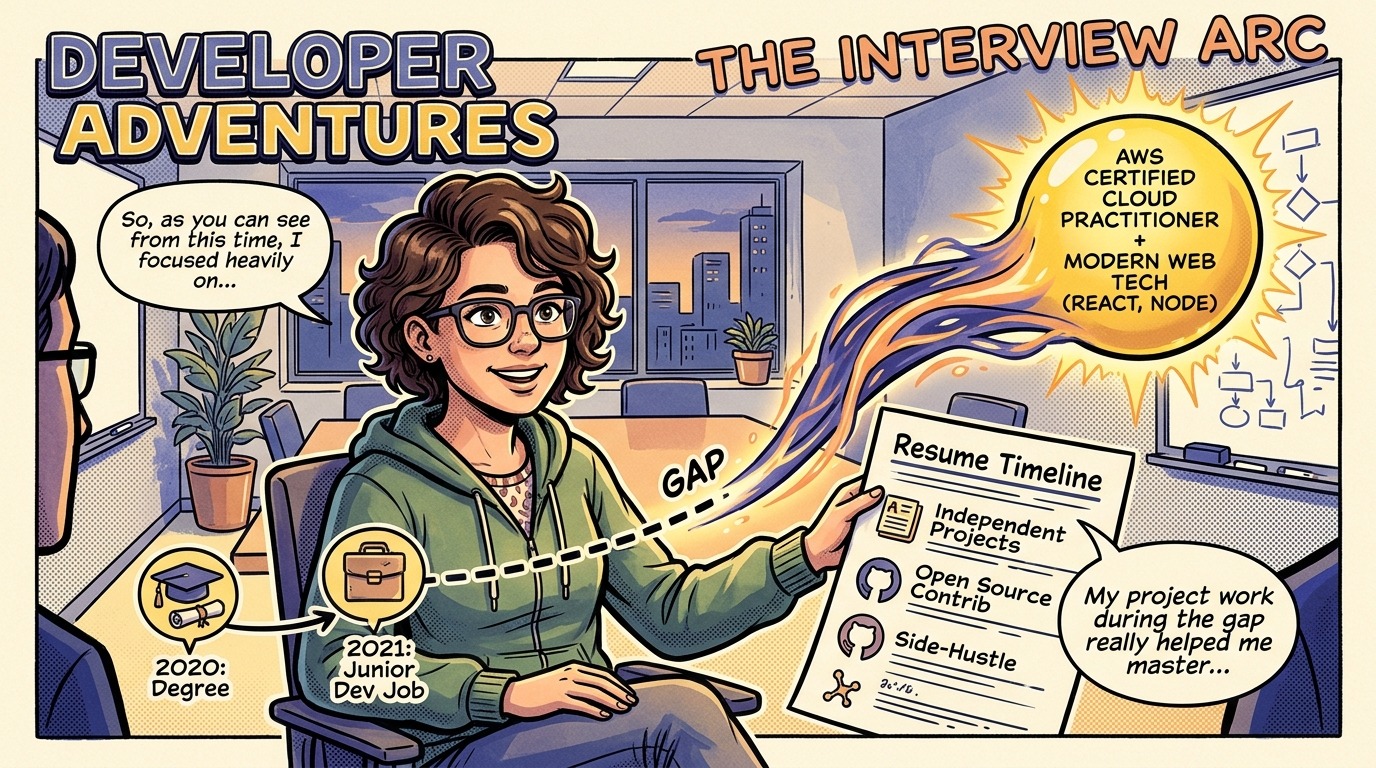
You submit your resume for a Senior Software Engineer position. You check every box: strong Python background, system design experience, Docker, and AWS. But right between mid-2024 and early 2025, there is a distinct eight-month blank space.
Your stomach drops a little when the interviewer opens the conversation with:
"I noticed there's a gap in your work history between your last role at Acme Corp and today. What were you up to during that time?"
If you have ever felt your pulse spike at that exact sentence, you are far from alone. In today’s tech landscape—where tech lay-offs, burnout sabbaticals, family caregiving, and prolonged job hunts are common—resume gaps happen to outstanding engineers every single day.
Here is the truth that hiring managers rarely admit out loud: interviewer anxiety about resume gaps isn't about the gap itself. It is about how you communicate it.
In this guide, we will break down why interviewers ask about resume gaps, what red flags they are secretly scanning for, how to frame your answer with total confidence, and exact word-for-word scripts you can adapt for your next interview.
Why Interviewers Ask About Resume Gaps (It’s Not What You Think)
When an interviewer points out a gap on your resume, it is easy to assume they are playing detective, searching for reasons to disqualify you. But most technical hiring managers aren’t looking to penalize you. They ask because they want to evaluate three specific traits:
- Self-Awareness and Communication: Can you address a potential elephant in the room directly, calmly, and professionally without going on the defensive?
- Growth Mindset: Did you spend that time constructively (upskilling, building projects, freelancing, resting to avoid burnout, handling life commitments)?
- Current Skill Readiness: Are your technical skills fresh, or will you need months of ramp-up time to get back up to speed?
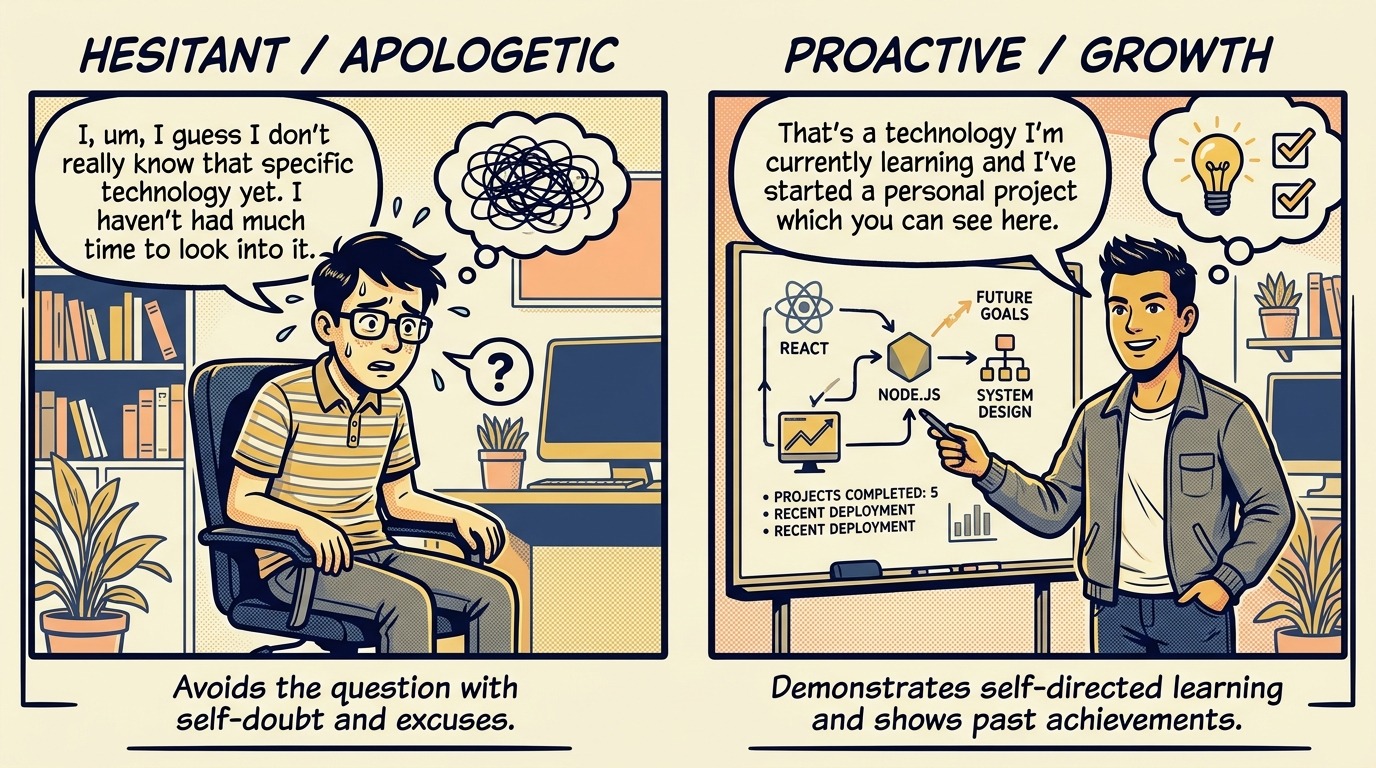
If you sound defensive, overly apologetic, or evade the question, you unintentionally transform a routine question into a red flag.
The 3-Part Golden Framework: Anchor, Bridge, & Connect
To answer the gap question seamlessly, use the Anchor, Bridge, & Connect (ABC) framework. It keeps your response concise (under 60 seconds) and shifts the spotlight back to what actually matters: your engineering capabilities.
1. Anchor (State the Fact Briefly)
State the reason for the gap in one clear, confident sentence. No long backstories, no excessive details, and zero apologies.
- Example: "After four years scaling microservices at my last company, I took six months off to focus on full-time upskilling and handle a family caregiving responsibility."
2. Bridge (Highlight What You Did or Learned)
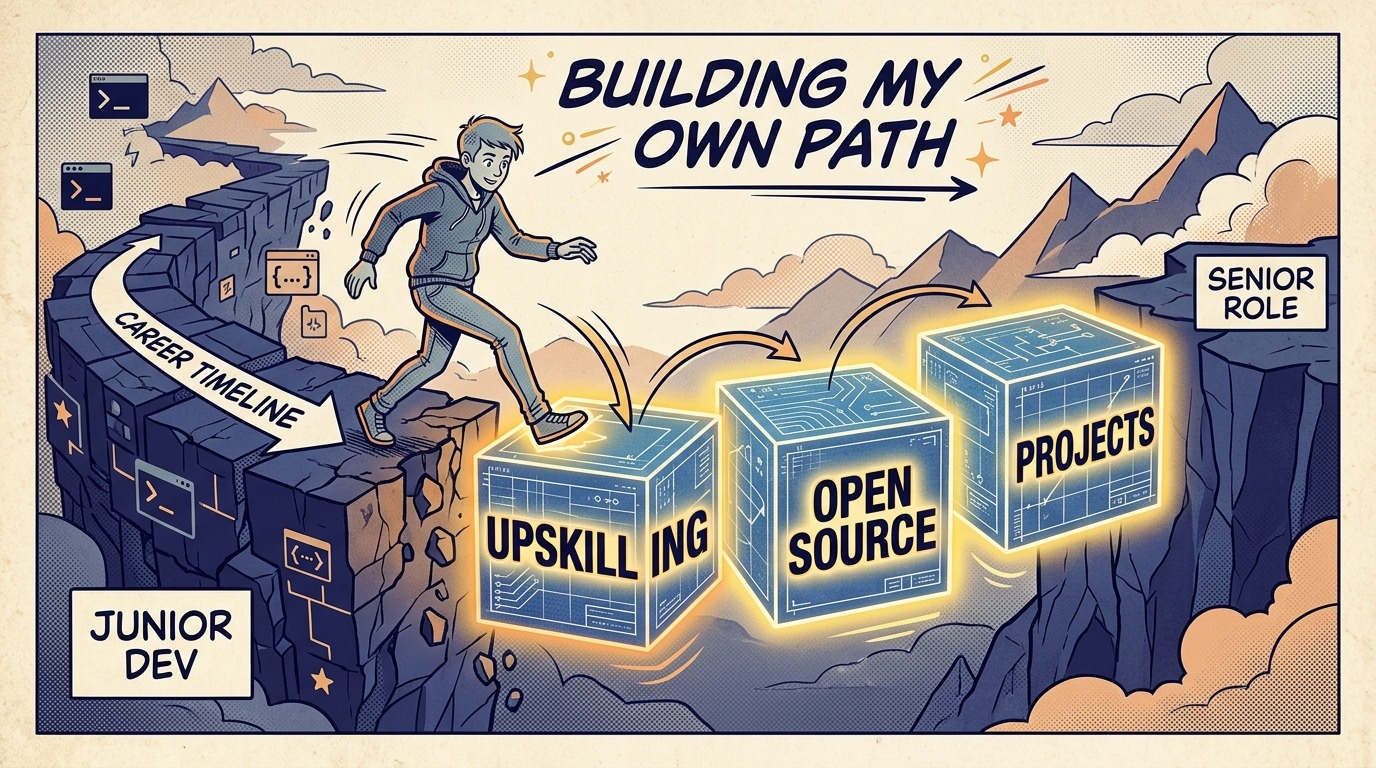
Explain how you spent that period staying sharp or growing as a professional. Mention personal projects, open-source contributions, certifications, or self-directed study.
- Example: "During that period, I built a full-stack real-time analytics app in TypeScript and Go, mastered Docker container orchestration, and refreshed my system design fundamentals."
3. Connect (Pivot Back to the Role)
Tie your experience directly to why you are excited about this company and role.
- Example: "That dedicated learning time reignited my passion for backend performance, which is why your team's current work on high-throughput event processing aligns so closely with what I want to build next."
Word-for-Word Scripts for Common Resume Gap Scenarios
Here is how to put the ABC framework into practice for different real-world scenarios:
Scenario A: Laid Off During Tech Downturns
The Wrong Approach: "Yeah, the market was terrible and my company laid off 30% of us. It's been impossible to find anything for 7 months."
The Golden Approach:
"My previous company went through a restructuring in late 2024 that impacted our entire engineering division. I used the transition period intentionally—first taking a couple of weeks to reset, and then spending the last several months sharpening my system design skills and contributing to open-source React libraries. Now I'm fully refreshed and ready to jump back into a fast-paced frontend engineering role like this one."
Scenario B: Personal / Medical / Caregiving Leave
The Wrong Approach: "I had a lot of personal medical issues and family emergency stuff I had to deal with, so I couldn't work."
The Golden Approach:
"I took some time off to take care of a family health matter, which required my full attention. That situation is completely resolved now. During the tail end of my time off, I made sure to stay sharp by diving deep into cloud architecture and building side projects. I’m excited to bring that refreshed energy into a full-time SRE role."
Scenario C: Burnout Sabbatical
The Wrong Approach: "Honestly I was totally burned out from 80-hour work weeks so I just quit and did nothing for half a year."
The Golden Approach:
"After shipping three major product launches back-to-back, I made a conscious decision to take a planned sabbatical to prevent burnout and recharge. It gave me the mental space to evaluate my career goals, learn modern stack paradigms like Next.js and GraphQL, and come back with a clear focus. I’m now looking for a long-term engineering home where I can build sustainable, high-impact software."
Scenario D: Extended Job Search
The Wrong Approach: "I've been interviewing everywhere for 9 months but no one has given me an offer yet."
The Golden Approach:
"Finding the right culture fit and technical challenge takes time, so I’ve been selective in my search. Rather than rushing into the first available role, I've spent the past few months doing intensive interview preparation, building production-grade projects, and refining my system design skills. That focus led me to your team, where the engineering challenges directly match what I've been preparing for."
4 Rules to Remember Before Your Next Technical Interview
- Never Lie on Your Resume: Fabrication is an automatic rejection if background checks reveal dates don't line up. Own your timeline with pride.
- Keep It Brief: Give your answer in 45-60 seconds max. The longer you talk about the gap, the more importance you give it.
- Show, Don't Just Tell: Mentioning a GitHub repository, a deployed live app, or a certification proves that your technical muscle memory never faded.
- Practice Out Loud with Realistic Mock Interviews: Reading scripts is a start, but saying them out loud under pressure is where true confidence is forged.
Practice your pitch using AI-powered voice mock interviews on platforms like totop.app. Getting real-time feedback on your tone, pace, and clarity before walking into the real room ensures that when the gap question comes up, you deliver your response effortlessly.
Frequently Asked Questions
Should I put a resume gap directly on my resume?
If your gap is longer than 6 months, consider adding a brief 1-liner entry on your resume under Experience. For example:
- Self-Directed Upskilling & Technical Projects (Oct 2024 – Present) — Focused on AWS Cloud Practitioner certification, advanced Python algorithms, and open-source contributions.
How far back do interviewers care about resume gaps?
Interviewers primarily care about gaps within the last 2-3 years. A 4-month gap from 7 years ago is rarely ever brought up.
What if I did no coding during my gap?
That is okay! Highlight soft skills, adaptability, or life perspective gained. Then focus heavily on your enthusiasm and readiness to get back to building great software today.
Final Thoughts
A gap in your resume is not a flaw; it is simply a chapter in your career trajectory. When you own your story with clarity and bridge it back to your passion for engineering, interviewers will judge you on what you can build tomorrow—not the blank spaces on paper from yesterday.