"Sell Me This Pen": How to Actually Nail the Answer
"Sell me this pen."
It’s the single most famous—and dreaded—question in sales interview history. Made iconic by Jordan Belfort in The Wolf of Wall Street, this classic prompt pops up constantly in interviews for Account Executives, Business Development Reps (BDRs), Sales Managers, and even Product Managers.
When an interviewer slides a ballpoint pen across the desk and hits you with this prompt, they aren't actually looking for a flashy infomercial about ink flow or ergonomic grips. They are testing your understanding of fundamental sales psychology: Do you sell product features, or do you uncover customer value?
In this guide, we’ll break down why interviewers ask this question, the 3 most common ways candidates fail, and a bulletproof 4-step framework to nail your answer every single time.

Why Interviewers Ask "Sell Me This Pen"
Before jumping into the script, you need to understand what the hiring manager is evaluating. When they ask you to sell a pen on the spot, they are observing four critical competencies:
- Discovery & Questioning Skills: Do you jump straight into pitching, or do you ask intelligent questions to understand the buyer’s environment?
- Value-Based Selling: Can you tie an ordinary object to a specific need, problem, or emotional trigger?
- Closing Ability: Do you ask for the sale or commit to a next step, or do you trail off awkwardly?
- Poise Under Pressure: Can you handle a surprise roleplay without getting flustered or breaking character?
The 3 Ways Most Candidates Fail
To land a job in high-performing sales organizations, you must avoid the amateur traps that 90% of applicants fall into.
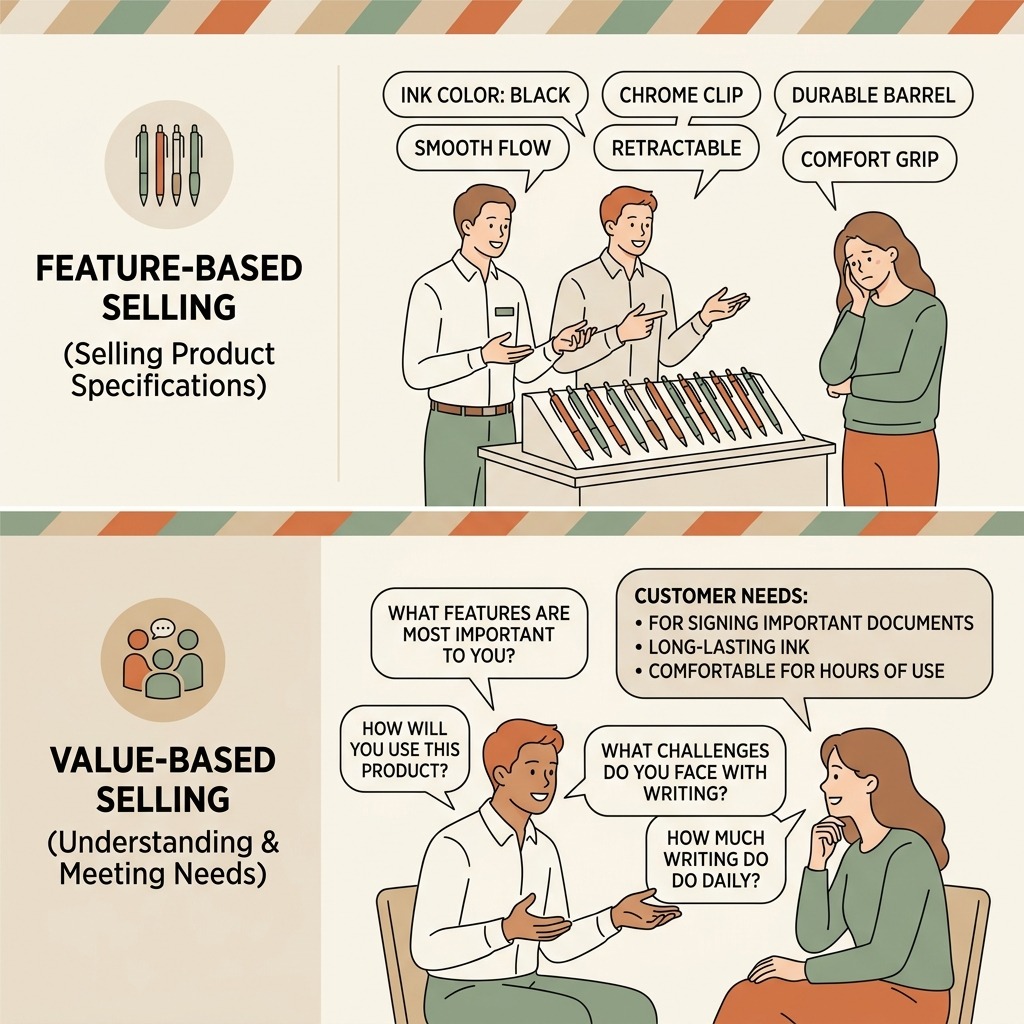
Trap #1: The Feature Dump (The "Infomercial" Approach)
Candidate: "Look at this pen! It has smooth black ink, a comfortable rubber grip, a durable chrome clip, and it’ll last you five years without leaking!"
Why it fails: You’re guessing what the customer cares about. What if the interviewer doesn't use pens? What if they sign million-dollar contracts and only care about executive prestige? Pitching features before asking questions is called "pitching in the dark."
Trap #2: The High-Pressure Scarcity Hack
Candidate: "This is the last pen in the building. If you don't buy it right now for $5, you won't be able to write anything down for the rest of the day."
Why it fails: Artificial urgency feels manipulative and gimmicky. While Belfort’s crew used a supply-and-demand trick ("Write your name on a napkin... oh, you don't have a pen"), modern enterprise sales relies on discovery and trust, not party tricks.
Trap #3: Freeze & Overthink
Candidate: "Umm... well... it's a really nice blue pen..."
Why it fails: In sales, confidence is magnetic. Showing hesitation or getting unnerved by a roleplay signal that you might crumble when a real prospect pushes back on price or contract terms.
The 4-Step Framework: How to Sell the Pen Like a Pro
The winning response flips the dynamic. Instead of selling a physical object, you lead a targeted discovery conversation.
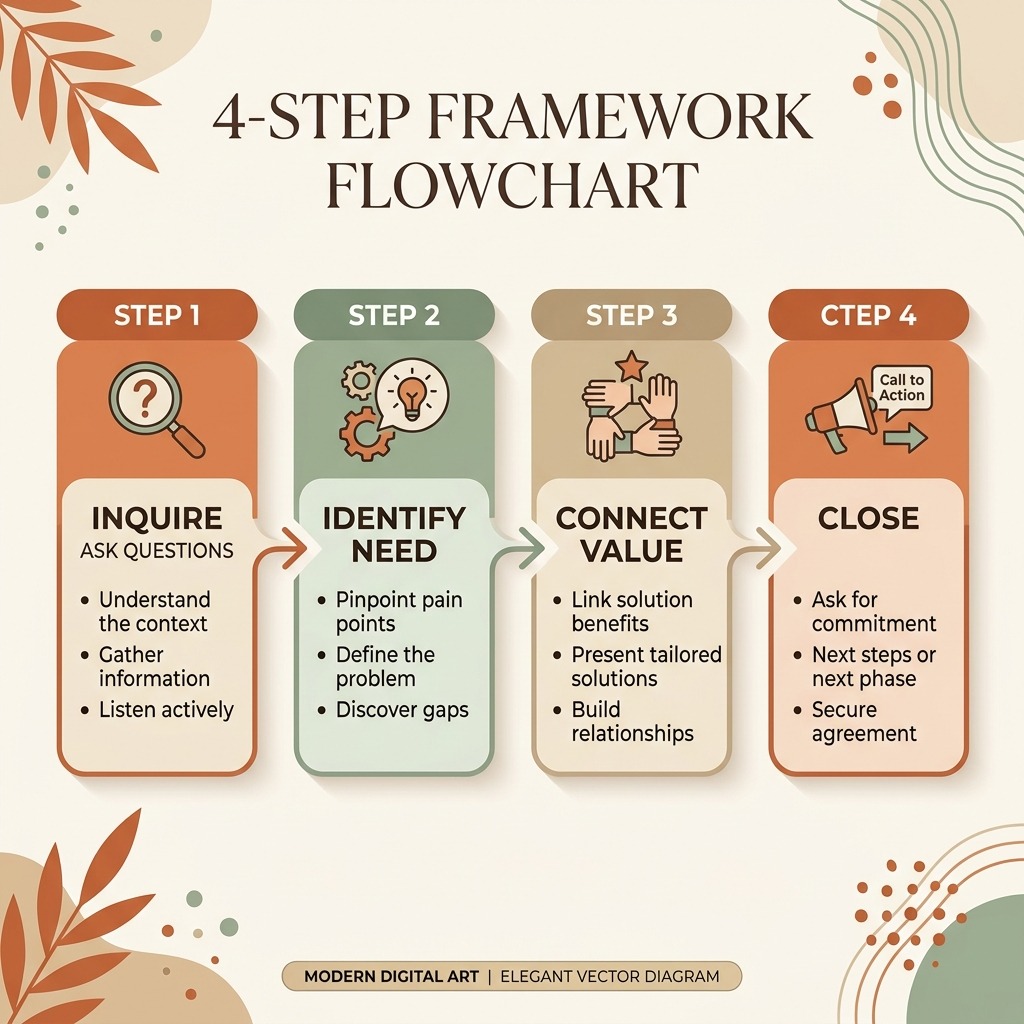
Here is the 4-step framework used by top enterprise account executives:
Step 1: Inquire (Gather Context & Habits)
Start by asking open-ended questions about how, when, and why the interviewer uses pens in their professional or personal life.
- Key Objective: Get the prospect talking about their current habits.
- Sample Questions:
- "How often do you use a pen during your typical workday?"
- "When was the last time you bought or used a premium pen?"
- "What types of documents are you usually signing or taking notes on?"
Step 2: Identify Pain Points & Desires
Listen carefully to their responses and probe for frustration or aspirational needs.
- Key Objective: Uncover what matters most to them (e.g., reliability, comfort, executive status, convenience).
- Sample Questions:
- "Have you ever had a cheap pen bleed on an important agreement right in front of a client?"
- "What’s the most frustrating thing about the pens currently sitting in your desk drawer?"
Step 3: Connect Value to Their Specific Need
Now—and only now—do you present the pen. But you only mention features that directly solve the pain point or fulfill the desire they just shared.
- Key Objective: Custom-tailor your solution to their exact words.
- Sample Pitch:
- "You mentioned earlier that you frequently sign major client contracts in person, and there’s nothing worse than an ink smudge or a pen skipping mid-signature. This pen features quick-drying archival ink and a weighted brass barrel designed specifically to feel decisive and effortless when finalizing key deals."
Step 4: Close with a Clear Call to Action (CTA)
Every great sales conversation ends with a clear request for commitment or next steps.
- Key Objective: Ask for the sale or schedule a follow-up.
- Sample Close:
- "Based on what you've shared, this pen is built for exactly the kind of client meetings you lead every week. Would you like me to set aside a custom box for your team today?"
Full Word-for-Word Sample Script
Here is how a complete, high-scoring interview response sounds in action:
Interviewer: "Sell me this pen."
You: "I'd be glad to. To make sure I don't waste your time, do you mind if I ask a couple of quick questions about how you usually write?"
Interviewer: "Sure, go ahead."
You: "Great. In your current role as VP of Sales, how often are you taking handwritten notes or signing documents in person?"
Interviewer: "Mostly when I'm meeting candidates or signing customer contracts."
You: "Got it. And when you're in those high-stakes customer meetings, what's the most annoying issue you run into with standard office pens?"
Interviewer: "Honestly? Half the time the ink is dry, or they feel cheap when I hand them to an executive."
You: "That makes total sense. Handing a cheap plastic pen to a client right at the closing moment undercuts the premium experience you built during the demo.
What I have here is a precision-engineered executive pen with pressurized archival ink that guaranteed never skips or smudges. It carries a subtle heft that feels substantial in hand, so when your client signs, the moment feels official and memorable.
Since you mentioned you have two enterprise contract signings coming up this Thursday, why don't we get a pair of these delivered to your office by tomorrow morning?"
Practice Makes Permanent
Understanding the theory is only half the battle. Delivering a natural, confident response under interview conditions requires real practice.
At totop.app, you can practice sales, leadership, and technical interview scenarios with interactive AI mock interviewers. Get real-time feedback on your discovery questions, tone, and closing technique before stepping into your actual hiring loop.
Key Takeaways
- Don't pitch immediately: Ask questions first to establish the buyer's context.
- Sell the outcome, not the ink: Focus on prestige, reliability, or efficiency rather than physical specs.
- Listen twice as much as you speak: Let the interviewer reveal their needs so you can echo their language back to them.
- Always ask for the close: End your response with a confident, natural call to action.