Marketing Manager Interview Questions and How to Answer Them
Stepping into a Marketing Manager interview can feel like spinning plates on a tightrope. One minute you are expected to dissect Customer Acquisition Cost (CAC) and attribution models, and the next you are pitching brand positioning strategies or explaining how you align cross-functional product and sales teams.
Whether you are aiming for a Growth Marketing Manager position, a Senior Product Marketing Lead role, or a broader Brand Marketing Manager spot, interviewers aren't just checking your resume accomplishments—they want to see how you think under pressure, how you balance data with creative intuition, and how you lead teams through uncertain market conditions.
In this guide, we'll walk through the most frequently asked marketing manager interview questions across strategic, tactical, behavioral, and leadership categories. We'll also cover framework-driven answering techniques so you can structure high-impact answers that land offers.

The Mindset Shift: Tactical Execution vs. Strategic Leadership
Before diving into specific questions, it is crucial to recognize what separates mid-level marketers from successful Marketing Managers.
Junior and specialist roles focus primarily on execution: launching ads, writing copy, managing social media schedules, or running A/B experiments. As a manager, your value lies in strategic framing, resource allocation, revenue impact, and team enablement.
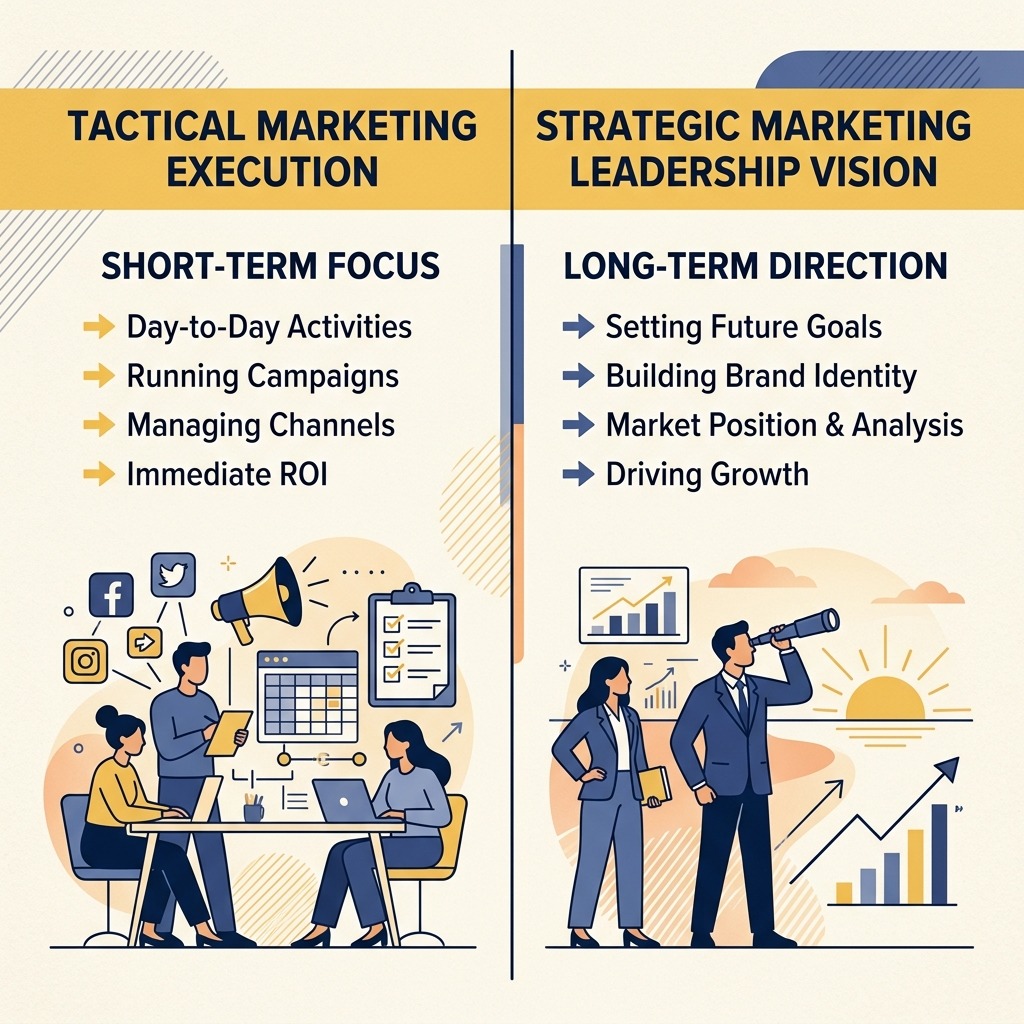
When answering any question, keep this mental model handy:
- Tactical Focus: "We launched an email workflow to 10,000 subscribers with a 24% open rate."
- Strategic Leadership: "We identified a drop-off in our onboarding funnel, re-segmented our cohort based on intent signals, and redesigned our lifecycle email sequence, driving an 18% increase in trial-to-paid conversion."
1. Strategic & High-Level Marketing Questions
These questions test your ability to look at the big picture, analyze competitive dynamics, and align marketing initiatives with core business objectives.
Q1: "How do you evaluate a new market opportunity or product launch strategy?"
What they are testing: Your go-to-market (GTM) framework, analytical capability, and customer-centric thinking.
How to answer:
- Target Audience & TAM: Start with market segmentation, total addressable market (TAM), and customer pain points.
- Competitive Landscape: Explain how you evaluate existing solutions and identify differentiation hooks.
- Positioning & Messaging: Detail how you refine core value propositions.
- Channel Selection & Testing: Outline how you run small, low-risk channel experiments before committing heavy budgets.
Sample Answer Snippet:
"When evaluating a GTM opportunity, I always start by auditing user research and qualitative customer feedback alongside quantitative TAM calculations. For instance, in my last role, when launching our B2B analytics module, we conducted pilot interviews with 25 key accounts to validate positioning. We then tested messaging across two performance channels before scaling spend, achieving a 32% lower customer acquisition cost compared to our standard benchmarks."
Q2: "Walk us through a marketing campaign that failed. What happened, and what did you learn?"
What they are testing: Intellectual honesty, resilience, analytical problem-solving, and adaptability.
How to answer:
- Choose a real campaign where something did not meet expectations (avoid humblebrags like "our campaign was too successful!").
- Clearly isolate the root cause (e.g., poor channel attribution, flawed messaging hypothesis, inaccurate audience targeting).
- Highlight the pivot or systemic improvement you implemented as a result.
2. Metrics & Performance-Driven Questions
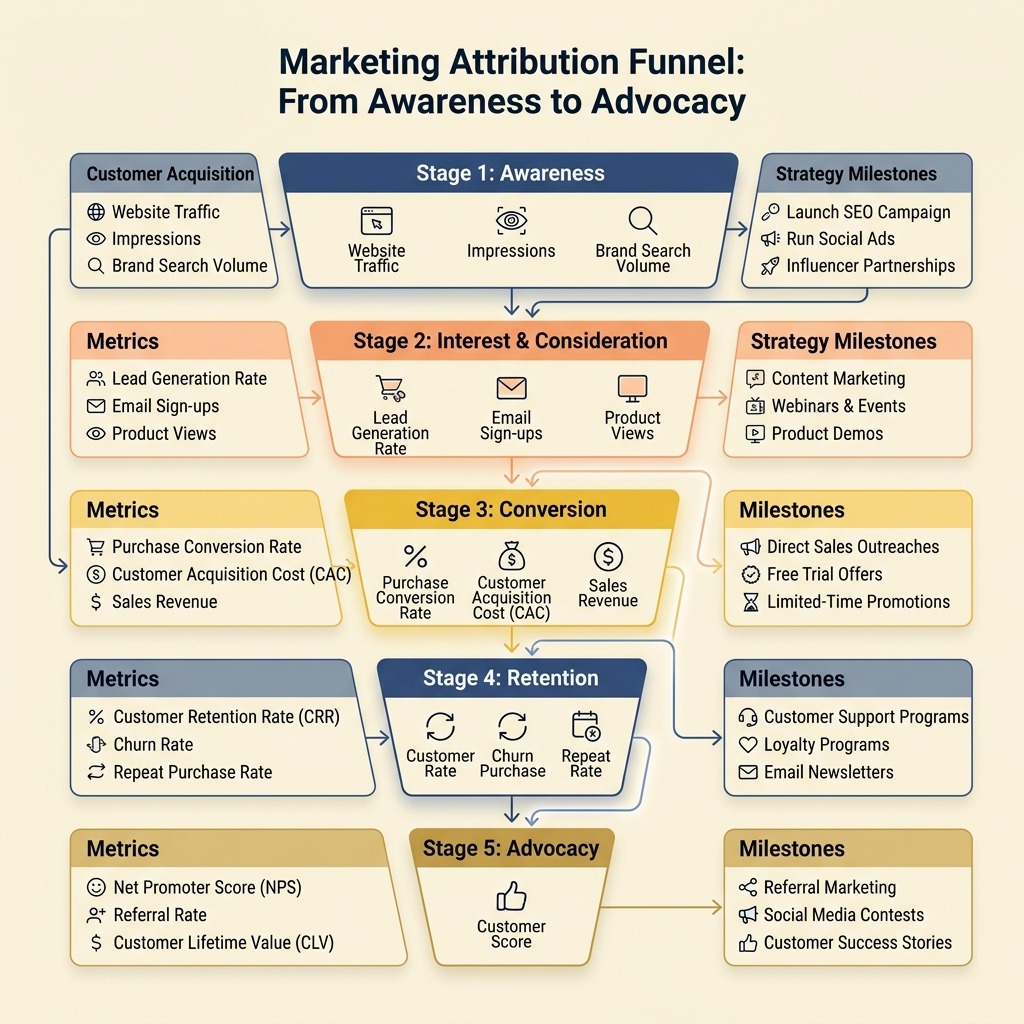
Modern marketing management is inextricably tied to business health metrics. You don't need to be a data engineer, but you must speak fluently in unit economics.
Q3: "Which marketing metrics do you care about most, and how do you report them to executives?"
What they are testing: Business literacy and executive communication skills.
How to answer: Differentiate between vanity metrics (likes, impressions, total page views) and business metrics (CAC, Customer Lifetime Value [LTV], Payback Period, Pipeline Value, Churn Rate, and Marketing-Originated Revenue).
- Top of Funnel: Traffic quality, intent leads, organic growth velocity.
- Middle & Bottom of Funnel: Conversion rate per stage, MQL-to-SQL velocity, CAC-to-LTV ratio.
- Executive Summary: Explain that when presenting to the C-suite or VP of Marketing, you translate campaign activities into pipeline contribution, net revenue expansion, and customer retention.
3. Scenario & Behavioral Questions
Behavioral questions test how you navigate ambiguity, resolve conflict, and prioritize competing requests.
Q4: "How do you handle disagreement with sales leadership regarding lead quality?"
What they are testing: Cross-functional collaboration and empathy for sales operations.
How to answer: Avoid finger-pointing. Frame your response around joint SLA definitions (Service Level Agreements) and shared definitions of qualified prospects.
- Explain how you audit lead definitions together with sales managers.
- Describe setting up closed-loop feedback mechanisms (e.g., weekly CRM pipeline syncs) to review disqualified leads and refine scoring criteria collaboratively.
4. Frameworks to Structure Your Interview Answers
To deliver sharp, memorable answers during your interview, rely on structured behavioral response frameworks:
The STAR Method (Situation, Task, Action, Result)
- Situation: Briefly set the scene (15–20% of your answer).
- Task: State the core challenge or goal you needed to address.
- Action: Explain your specific strategic choices and leadership actions (50% of your answer).
- Result: Share quantified outcomes (metrics, revenue growth, team efficiency wins).
The CIRCLES Method (for GTM & Campaign Design)
- Comprehend the context & goals
- Identify the target customer personas
- Report customer needs & pain points
- Cut through tradeoffs & prioritize
- List prospective marketing solutions
- Evaluate metrics & risk profiles
- Summarize the overall recommendation
How to Prepare & Master Your Responses
Theory is great, but fluid verbal delivery is what seals the deal. Mock practice helps turn complex GTM ideas into crisp, confident answers.
- Map Your Career Stories: Draft 5 to 6 versatile core stories (a successful product launch, a failed experiment, a cross-functional conflict, a major campaign turn-around) that can be adapted to multiple questions.
- Practice Out Loud: Record your answers or run realistic mock interview sessions. If you want interactive, instant AI-powered feedback on your delivery, metrics articulation, and tone, platforms like totop.app offer dedicated behavioral and role-specific mock interview simulations to polish your answers before the actual interview day.
Summary Checklist for Candidates
Before walking into your Marketing Manager interview, ensure you have:
- Memorized key metrics from your past 2–3 roles (CAC, LTV, conversion benchmarks, revenue growth percentages).
- Prepared 2 GTM campaign case studies detailing audience research, channel strategy, and results.
- Formulated 2–3 thoughtful questions for the interviewer regarding team structure, marketing stack, and budget allocation flexibility.
With structured frameworks, clear metric awareness, and authentic storytelling, you'll demonstrate the exact blend of strategic leadership and marketing acumen top hiring managers are looking for. Good luck!