How to Prepare for Your First Technical Interview
Landing your first technical interview is a huge milestone. It means your resume stood out, your portfolio caught their eye, and you're one step closer to landing that dream developer role. However, technical interviews can be notoriously rigorous, balancing algorithmic problem-solving with system design, language trivia, and behavioral fitness.
Whether you're self-taught, an academy graduate, or coming from a computer science background, knowing exactly how to prepare for your first technical interview is crucial to turning nerves into confidence.

1. Polish Your Foundation (Resume & Portfolio)
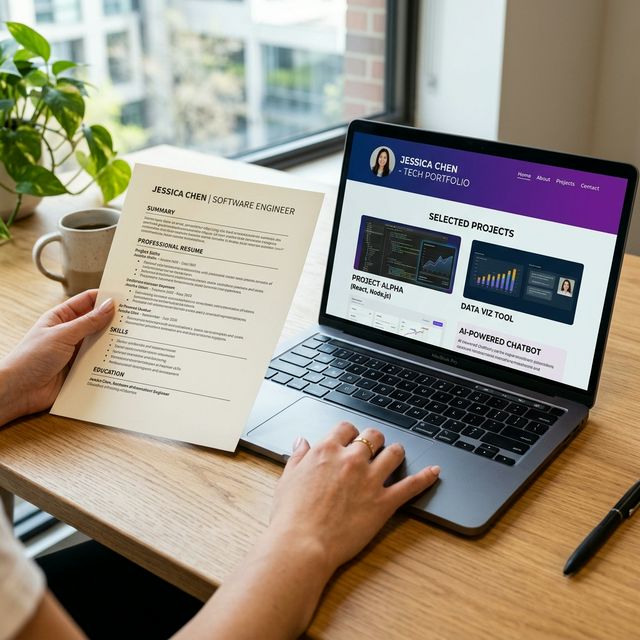
Before you write a single line of code on a whiteboard, remember what got you the interview in the first place: your background. Interviewers will almost certainly ask you to walk them through your past projects, the tools you used, and the challenges you faced.
- Know Your Resume Inside Out: Be prepared to discuss ANY technology or project listed on your resume. If it's on there, it's fair game for deep-dive questions.
- Prepare Your "Elevator Pitch": Have a sharp 2-minute summary of who you are, what you've built, and why you're passionate about software engineering.
- Portfolio Deep Dive: Choose 1-2 projects you're most proud of and practice explaining the architecture, the hardest bug you fixed, and what you'd do differently if you built it again today.
2. Master the Fundamentals (Data Structures & Algorithms)
The "coding challenge" portion is the most famous (and often most feared) part of a technical interview. Companies want to see how you think, how quickly you can synthesize a solution, and your understanding of time and space complexity.
- Stick to a Core Language: Choose one language you are incredibly comfortable with (like Python, JavaScript, or Java) and stick to it. Don't try to learn a new language just for the interview.
- Grind the Basics: You don't need to know every obscure algorithm, but you must know your Arrays, Hash Maps, Linked Lists, Trees, and the fundamentals of searching/sorting.
- Time Complexity (Big O): Always be ready to answer "What is the time complexity of your solution, and how can we optimize it?"
3. Think Out Loud
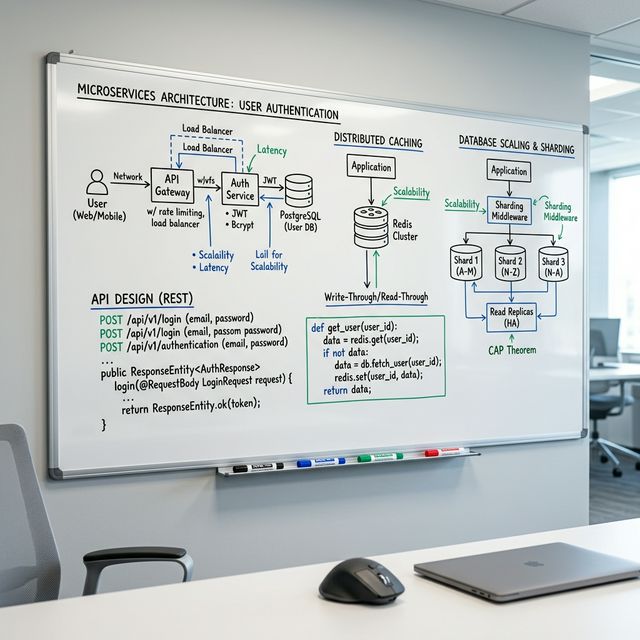
This is arguably the most important piece of advice you will ever receive for technical interviews: Do not code in silence.
Interviewers aren't just looking for a working solution; they want to see your brain at work. If you silently stare at the board for 20 minutes and then write the perfect solution, you might still fail because they don't know how you got there.
- Clarify the Problem: Always start by restating the problem and asking clarifying questions. (e.g., "Are there negative numbers? Is the array sorted?")
- Propose a Brute Force Solution: Outline the simplest, ugliest way to solve it first just to get your gears turning.
- Optimize: Discuss how you can improve the brute-force method before you start writing code.
- Implementation: Write your code, explaining your thought process line-by-line.
4. Prepare for Behavioral Questions
Technical skills get you the job, but behavioral skills determine if they want to work with you. The STAR method (Situation, Task, Action, Result) is your best friend here.
Have examples ready for:
- A time you disagreed with a teammate or manager.
- A time you failed or missed a deadline.
- A technical challenge you had to overcome.
- Why you want to work at this specific company.
5. Mock Interviews and Rest
Finally, don't forget to practice in a realistic environment. Doing LeetCode in your room with music on is completely different from someone watching you code on a shared document or whiteboard.
- Schedule Mock Interviews: Use platforms to do peer mock interviews, or ask a software engineering friend to grill you.
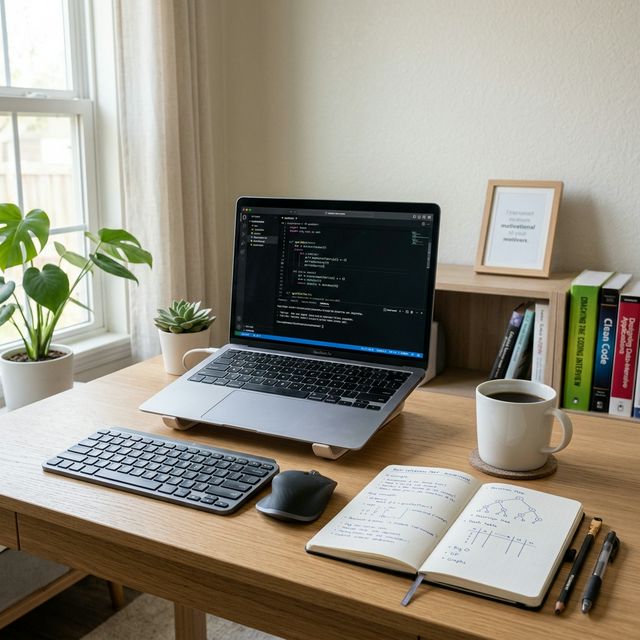
- Calm Down: The night before the interview, stop coding. Review your high-level notes, relax, and ensure your workspace (if remote) is clean, quiet, and reliable.
Final Thoughts
Your first technical interview is a learning experience. Even if you bomb it, the feedback and the environmental familiarity you gain will make you 10x better for the next one. Trust your preparation, speak clearly, and remember that the interviewers want you to succeed.
Good luck! You've got this.