I Built a Micro-SaaS in 7 Days (Here's the Tech Stack)

Last month, I set myself a challenge. I wanted to see if I could build and launch a fully functional Micro-SaaS product in exactly seven days.
No months of planning. No endless tinkering with configurations. Just pure, focused execution.
The product is a simple dashboard tool that connects to API logs and generates clean, human-readable reports. It’s not ground-breaking, but it solves a real problem. And the response was wild: we got our first three paying customers within forty-eight hours of launching on Product Hunt.
But this isn’t a post about marketing or validation. It's a post about the tech stack.
When you only have a week, every technical decision counts. You cannot afford to spend two days debugging Webpack configs or arguing over state management libraries. You need tools that get out of your way and let you ship.
Here is the exact tech stack I used to build and launch a Micro-SaaS in 168 hours, and the lessons I learned along the way.
The Philosophy: Ship, Don't Over-Engineer
Before we look at the specific technologies, let's establish the main rule of 7-day development: Boring technology wins.
This is not the time to learn a new, experimental language or database. Use what you know inside out. If you know Rails, use Rails. If you know Django, use Django. For me, that meant a modern JavaScript/TypeScript stack.

Every piece of the stack was chosen based on three criteria:
- Speed of development: How fast can I go from file creation to a working feature?
- Zero-config deployment: Can I deploy in seconds without configuring Nginx, SSL certificates, or build pipelines?
- Scale potential: If the app gets popular, can it handle the traffic without me rewrite-ing the whole thing?
Here is how the architecture looked:
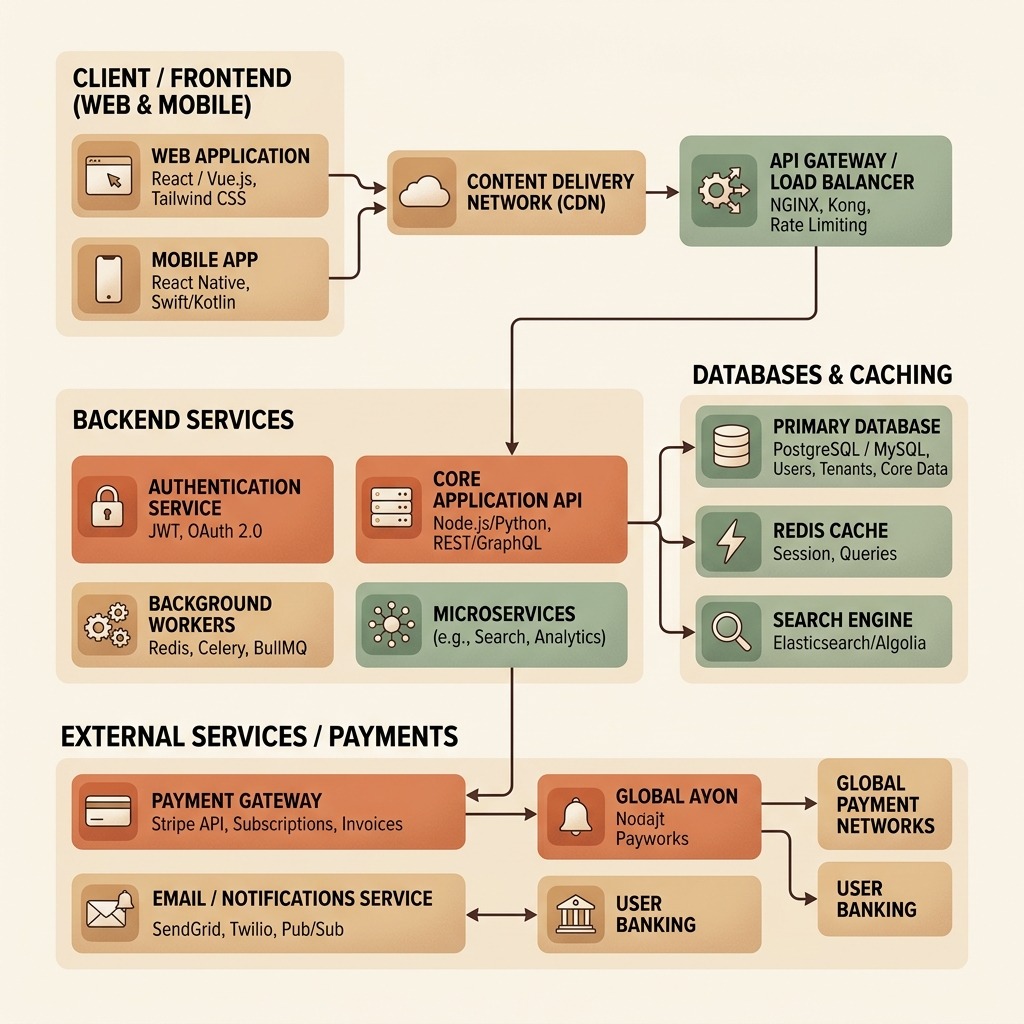
1. The Frontend: React + Vite + Tailwind CSS
For the frontend, I wanted something lightweight but fully featured. Next.js is great, but for a simple single-page application dashboard, a standard Single Page App (SPA) built with React and Vite is incredibly fast to build and host.
- Vite: If you are still using Create React App, stop. Vite starts up instantly and has lightning-fast Hot Module Replacement (HMR).
- Tailwind CSS: I didn't write a single line of custom CSS. Tailwind allows you to build responsive, beautiful UIs directly in your HTML/JSX. It completely eliminates the context-switching between stylesheets and component files.
- Lucide React: For icons. Clean, lightweight, and easy to use.
// A snippet of the clean UI builder using Tailwind CSS
export function DashboardHeader({ user }) {
  return (
    <header className="flex items-center justify-between border-b border-gray-200 bg-white px-6 py-4">
      <div className="flex items-center space-x-3">
        <span className="text-xl font-bold text-gray-900">ZenSync</span>
      </div>
      <div className="flex items-center space-x-4">
        <span className="text-sm text-gray-600">{user.email}</span>
        <button className="rounded-lg bg-orange-600 px-4 py-2 text-sm font-semibold text-white hover:bg-orange-700 transition">
          Upgrade Plan
        </button>
      </div>
    </header>
  );
}
2. The Backend: Node.js (Express) + TypeScript
I chose a separate backend API instead of a serverless approach. Serverless functions (like Vercel or Netlify functions) are excellent, but they can introduce cold-start latency and make complex database connection pooling a pain.
- Express + TypeScript: A standard, robust API server. TypeScript catches type errors before they reach production, which is a lifesaver when you are coding at 2 AM on day five.
- Node-Postgres (pg): For clean, simple queries.
- JWT (Json Web Tokens): For stateless, hassle-free authentication.
3. The Database: PostgreSQL + Prisma ORM
For the database, PostgreSQL was the obvious choice. It is rock-solid, supports JSON columns (crucial for storing dynamic API logs), and has excellent hosting options.
To talk to the database, I used Prisma. Prisma is a modern ORM that generates a fully typed client based on your database schema.
Here’s the simple database schema I defined:
datasource db {
  provider = "postgresql"
  url      = env("DATABASE_URL")
}

generator client {
  provider = "prisma-client-js"
}

model User {
  id        String   @id @default(uuid())
  email     String   @unique
  password  String
  createdAt DateTime @default(now())
  logs      ApiLog[]
}

model ApiLog {
  id        String   @id @default(uuid())
  userId    String
  user      User     @relation(fields: [userId], references: [id])
  method    String
  path      String
  status    Int
  payload   Json
  timestamp DateTime @default(now())
}
With Prisma, running migrations and updating the schema takes exactly one command: npx prisma migrate dev. It saved me hours of manual SQL writing.
4. Payments: Stripe Checkout
Do not write your own billing system. It is a security and compliance nightmare.
I used Stripe Checkout. Instead of building subscription management pages, pricing tables, and invoice history views, I redirected users to a Stripe-hosted checkout page. Once they paid, Stripe sent a webhook back to my API, and I updated the user's status in the database.
It took less than two hours to implement.
5. Deployment: Vercel + Railway
If you are spending time configuring Linux servers, Docker containers, or Kubernetes clusters during a 7-day build, you are doing it wrong.
- Frontend Hosting (Vercel): I connected Vercel to my GitHub repository. Every time I pushed to the
mainbranch, Vercel automatically built and deployed the frontend to a global CDN. It took 30 seconds to set up. - Backend & DB Hosting (Railway.app): Railway is amazing. I spun up a PostgreSQL database and deployed the Node.js API with a few clicks. It automatically detects the Dockerfile or Node.js environment, provisions SSL, and handles environment variables seamlessly.
Key Takeaways from the 7-Day Sprint
Building a Micro-SaaS so quickly teaches you what matters in software development. Here are my biggest tips for anyone looking to build fast:
- Avoid "Architecture Impostor Syndrome": You don't need microservices, Kubernetes, or complex message queues for a product with zero users. Keep it simple. A single monolithic API and a relational database will easily take you to thousands of users.
- Mock Your APIs First: Before building the database and backend, mock the API responses in the frontend. This lets you build the entire user interface and flow without getting bogged down in database queries.
- Practice System Design: Knowing how to quickly structure an application, database tables, and connection pools is a superpower. I spent months sharpening my engineering skills on interactive prep platforms like totop.app, which make learning system design and database indexing intuitive. When the clock is ticking, that foundation prevents you from making architectural mistakes that slow you down.
Are you planning to build your own Micro-SaaS? Don't wait for the "perfect" idea. Pick a simple problem, choose boring tools, and start shipping!