The Questions You Should Ask Your Interviewer
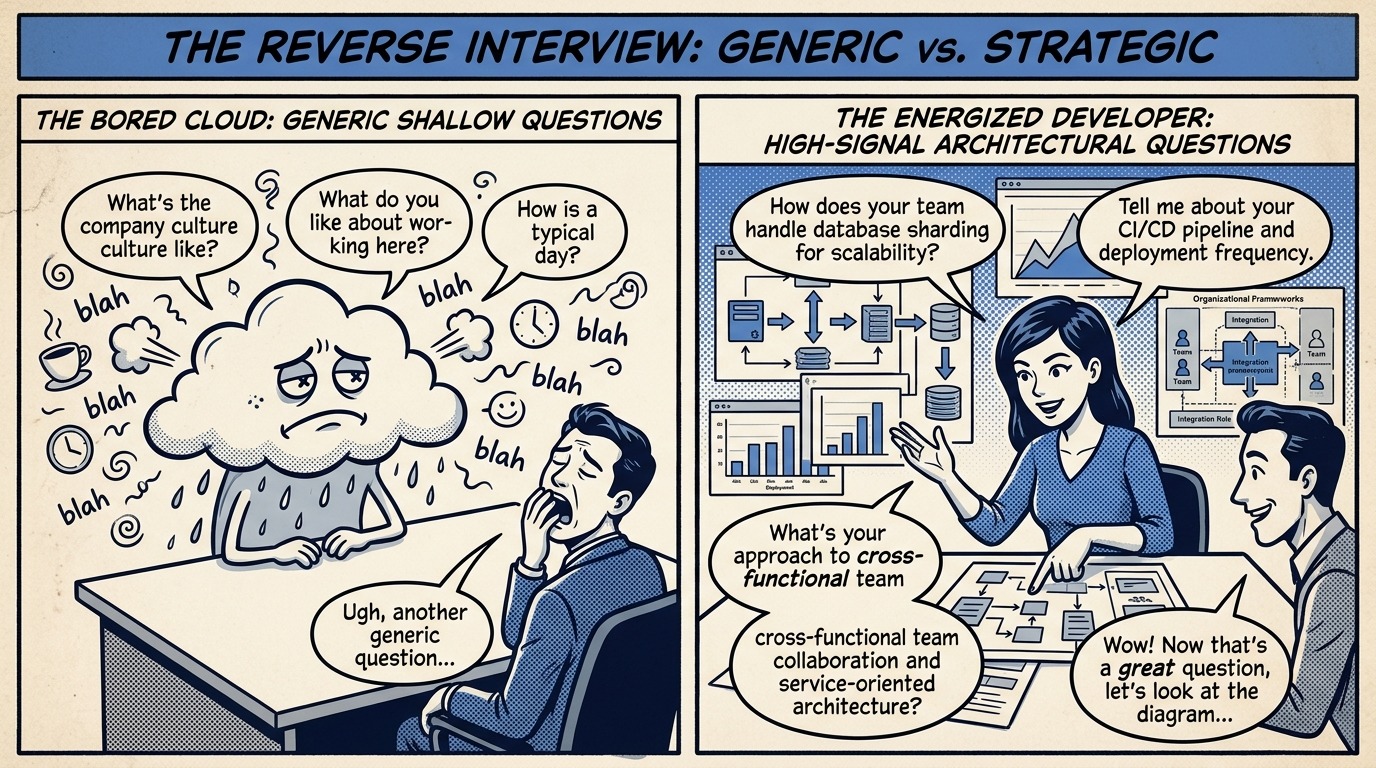
When the technical portion wraps up and the hiring manager turns to you with the inevitable prompt—"We have ten minutes left, what questions do you have for me?"—most candidates exhale prematurely. They treat the final segment as a polite formality, tossing out predictable softball queries like "What is a typical day like?" or "What do you like most about working here?"
That is a missed opportunity of massive proportions.
The reverse interview is your final chance to differentiate yourself from a stack of equally qualified resumes. More importantly, it is your only opportunity to inspect the inner workings of an engineering organization before committing years of your career to it. Asking incisive questions signals seniority, architectural maturity, and business acumen.
Why the Reverse Interview Matters
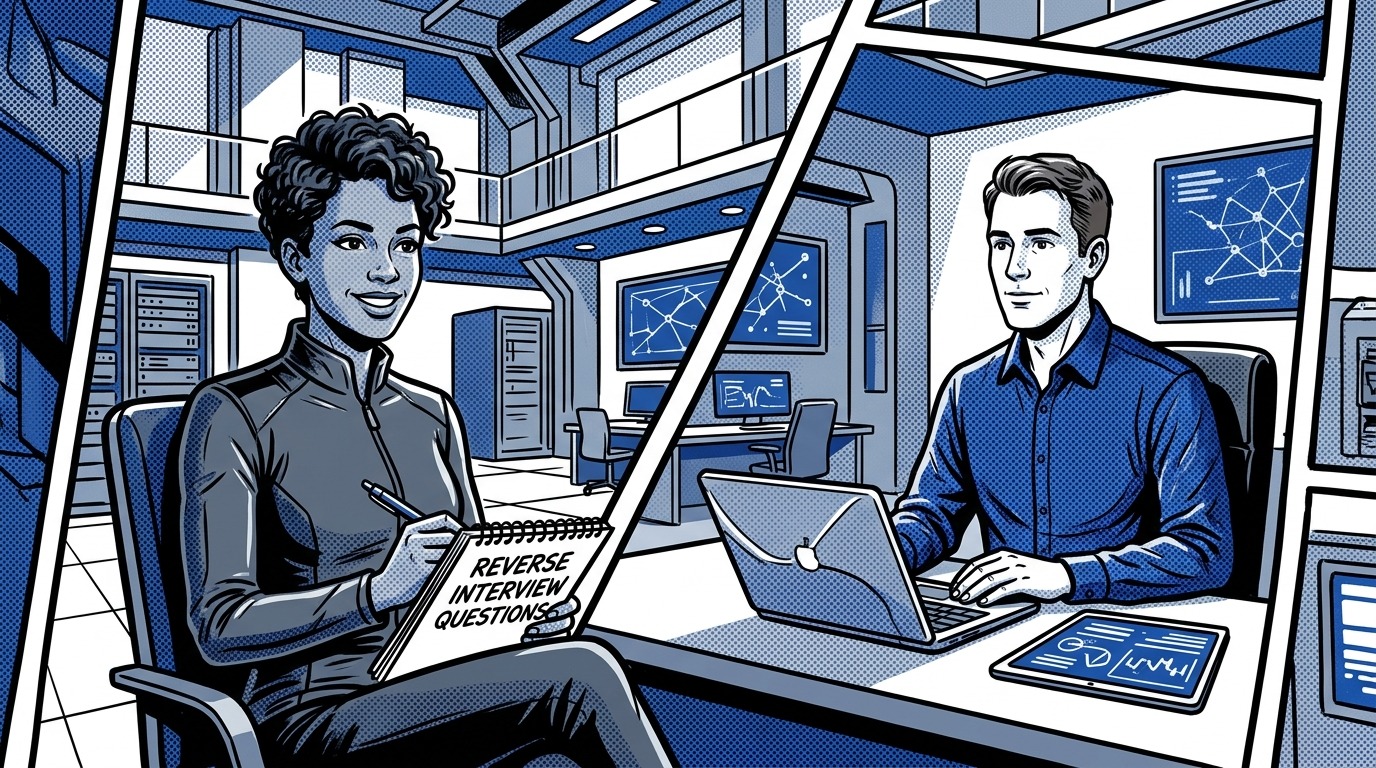
An interview is a two-way evaluation. While the company assesses whether your problem-solving skills meet their bar, you must evaluate whether their engineering practices, team dynamics, and operational realities will help you thrive or drive you to burnout.
Senior engineers understand that bad codebases, toxic on-call schedules, and misaligned roadmaps cannot be fixed by a competitive base salary. Understanding what interviewers actually look for in candidates reveals that hiring managers frequently evaluate candidates based on their intellectual curiosity and analytical depth during these final minutes.
When you ask high-signal questions, you accomplish three distinct goals:
- You demonstrate senior-level thinking: You prove you care about maintainability, testing, incident response, and team health.
- You uncover critical red flags: You identify hidden tech debt, chaotic management, and unreasonable deployment practices before signing an offer letter.
- You leave a memorable closing impression: Strong questions spark genuine peer-to-peer discussions rather than an interrogation.
Category 1: Technical Architecture & Codebase Health
Generic questions about the tech stack tell you what tools they use, but not how painful those tools are to maintain in production. Use these questions to understand architectural velocity and engineering hygiene.
1. How does the team manage and prioritize technical debt against product feature delivery?
Every engineering team accumulates tech debt. The key difference between high-performing organizations and feature factories is how that debt is scheduled.
- Green Flag: Dedicated refactoring sprints, fixed percentages of engineering bandwidth (e.g., 20% rule), or engineer-driven architectural backlog grooming.
- Red Flag: "We fix bugs when customers complain" or "We focus entirely on shipping new features right now."
2. What does your deployment pipeline look like from merged pull request to production?
This reveals whether the team embraces modern CI/CD automation or relies on manual releases and weekend panic.
- Listen for: Automated unit/integration test suites, canary rollouts, trunk-based development, and fast build times (under 15 minutes).
- Red Flag: Manual QA sign-offs taking multiple days, hotfixing directly on production servers, or scheduled release freezes before every holiday.
3. What was the most challenging production outage your team encountered recently, and how did you handle the postmortem?
This question immediately exposes whether the team practices blameless retrospectives or points fingers when systems fail.
- Listen for: Root-cause analysis (RCA) documents, blameless postmortem culture, automated monitoring alerts (DataDog, Prometheus), and systematic action items.
High-Signal Architecture Assessment:
├── Deployment Frequency: Daily vs Weekly vs Bi-monthly
├── CI/CD Automation: Automated integration tests vs Manual staging QA
├── Tech Debt Allocation: Deliberate 20% budget vs Total neglect
└── Incident Retrospectives: Blameless postmortems vs Individual scapegoating
Category 2: Daily Workflow & Engineering Autonomy
Your day-to-day happiness as a developer depends on autonomy, realistic estimations, and meeting hygiene.
4. How are engineering estimates and sprint commitments handled when deadlines slip?
Unrealistic deadlines are the number one cause of developer burnout.
- Green Flag: Engineering leads collaborate with product managers to descope non-critical features rather than mandating overtime.
- Red Flag: Rigid deadlines dictated from top management without engineering input, resulting in frequent weekend crunches.
5. How much uninterrupted focus time do individual contributors get on an average day?
Fragmented schedules filled with status update meetings destroy developer productivity and flow state.
- Listen for: Dedicated "No Meeting Days", asynchronous standups via Slack, or well-structured core working hours.
When navigating complex interview rounds, knowing how to handle tough questions gracefully helps you maintain your composure, allowing you to transition smoothly into asking these workflow inquiries.
Category 3: On-Call Rotations & Operational Reality
Nothing exposes real team health faster than on-call duties. Never accept an engineering offer without understanding who gets paged at 3:00 AM.
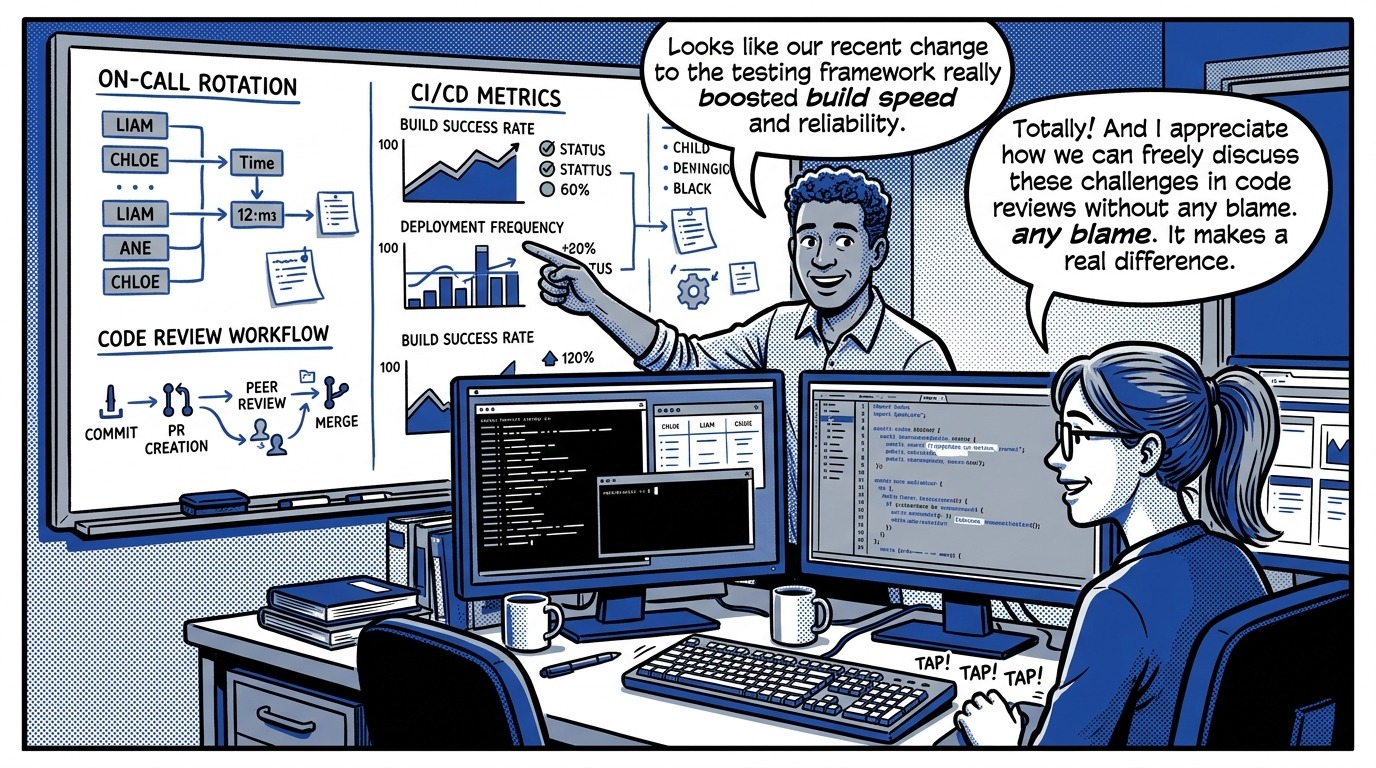
6. What does the on-call rotation look like, and how many alerts go off outside business hours?
- Green Flag: Secondary on-call escalation, compensation or comp days for off-hours pages, clear runbooks, and a high priority placed on eliminating noisy alerts.
- Red Flag: One person is permanently on-call, pages occur multiple times every night, or there are no written runbooks for critical services.
7. If a service repeatedly wakes engineers up at night, what authority does the team have to halt new feature work to fix it?
A healthy engineering leadership team empowers engineers to pause feature development until production stability is restored. If product management overrides reliability concerns, you will spend your weekends fighting fires.
Category 4: Team Culture & Psychological Safety
Culture isn't free snacks or ping pong tables; it is how humans interact when decisions are debated and mistakes happen. Combining these cultural inquiries with thorough behavioral interview preparation ensures you project leadership qualities while evaluating team harmony.
8. Can you tell me about a recent disagreement between engineering and product management? How was it resolved?
- Green Flag: Data-informed trade-offs, mutual respect, and clear escalation frameworks.
- Red Flag: Dismissive attitudes toward product partners, or top-down authoritarian directives.
9. What is the process for code reviews, and what happens when two senior engineers disagree on an architecture design?
Code reviews can either be collaborative learning environments or petty gatekeeping exercises.
- Listen for: Written style guides, automated linters, architecture decision records (ADRs), and collaborative consensus.
- Red Flag: PRs sitting unreviewed for weeks, or senior engineers blocking PRs over subjective stylistic preferences.
Reviewing challenging questions that trip up experienced developers illustrates why clear architectural alignment matters so much across senior ranks.
Category 5: Career Growth, Reviews, and Progression
You need to know how success is measured and whether high performance translates into career mobility.
10. What does a successful first 90 days look like for someone entering this specific role?
This provides immediate clarity on expectations and sets you up for rapid impact once you join.
- Listen for: Specific milestones (e.g., "Shipping your first PR within week two, taking ownership of the payment service by month two").
- Red Flag: Vague answers like "Just getting up to speed and learning the ropes."
11. How does the performance evaluation and promotion cycle operate in practice?
- Green Flag: Standardized engineering ladders, transparent leveling matrices, biannual reviews, and 1-on-1 coaching from managers.
- Red Flag: Promotions based strictly on tenure or subjective managerial discretion without clear criteria.
Quick Reference: Reverse Interview Matrix
┌──────────────────────┬────────────────────────────────────────────────────────┐
│ Domain               │ Key Target Areas to Probe                              │
├──────────────────────┼────────────────────────────────────────────────────────┤
│ Architecture         │ CI/CD automated gates, tech debt budget, RCA culture   │
│ Operations           │ Page volume, runbook coverage, off-hours comp time     │
│ Culture              │ Code review turnarounds, ADR consensus, focus time     │
│ Growth               │ 90-day deliverables, leveling rubrics, mentorship      │
└──────────────────────┴────────────────────────────────────────────────────────┘
How to Tailor Questions to Your Interviewer
Never ask the same generic set of questions to every interviewer. Match your queries to the person's functional role:
- Peer Software Engineers: Ask about daily pain points, local development setups, flaky tests, PR review turnaround times, and on-call paging frequency.
- Engineering Managers: Ask about 90-day success metrics, team growth, technical debt allocation, sprint planning autonomy, and performance review rubrics.
- Product Managers: Ask about roadmap visibility, feature prioritization models, user research integration, and how engineering feedback impacts product direction.
- VP / CTO / Directors: Ask about high-level technical strategy, cloud infrastructure cost management, hiring roadmaps, and business unit objectives.
Practicing comprehensive technical interview preparation strategies ensures you manage interview time effectively, leaving adequate room for these high-impact closing dialogues. You can also analyze the common reasons why many candidates fail technical interviews to avoid passive closing habits.
Sharpen Your Interview Confidence with AI Mock Practice
Knowing which questions to ask is only half the battle; delivering them naturally with executive presence requires deliberate practice.
With totop.app, you can run realistic, AI-powered mock interviews tailored specifically to your target company and job description. Experience dynamic conversations with customized AI interview personas, receive instant actionable feedback on your technical explanations, and practice your closing reverse-interview questions in a pressure-free environment before stepping into the real room.
Start practicing today on totop.app to walk into your next interview with complete confidence from the first greeting to the final question.