Why 90% of Developers Fail Technical Interviews (And How to Be in the 10%)
Let's address the elephant in the room. You've spent weeks grinding LeetCode, memorizing sorting algorithms, and practicing system design until your eyes bleed. You walk into the interview feeling like a rockstar, only to walk out an hour later feeling completely crushed.
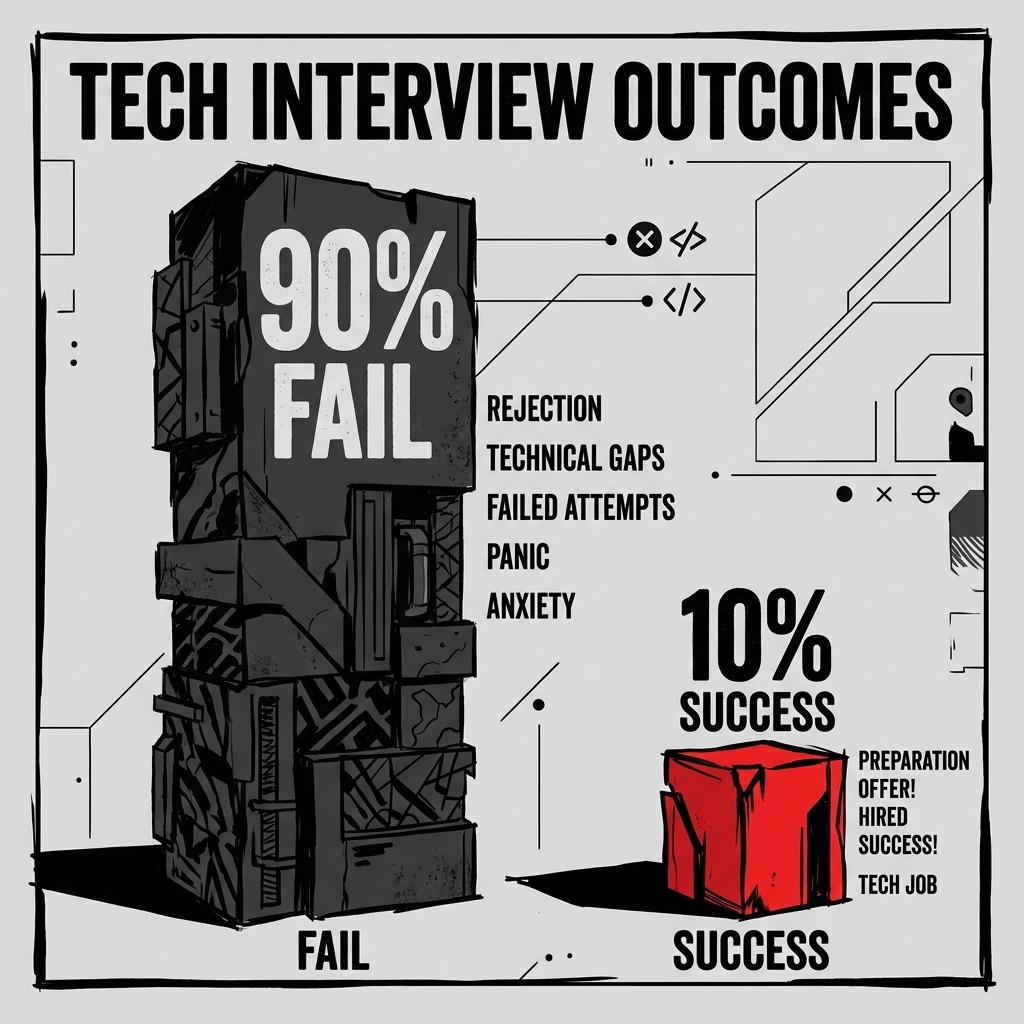
I’ve seen this happen countless times. Brilliant engineers—people who write production code every single day—freezing up when asked a medium-difficulty algorithmic question. The reality is harsh: almost 90% of candidates fail their technical interviews.
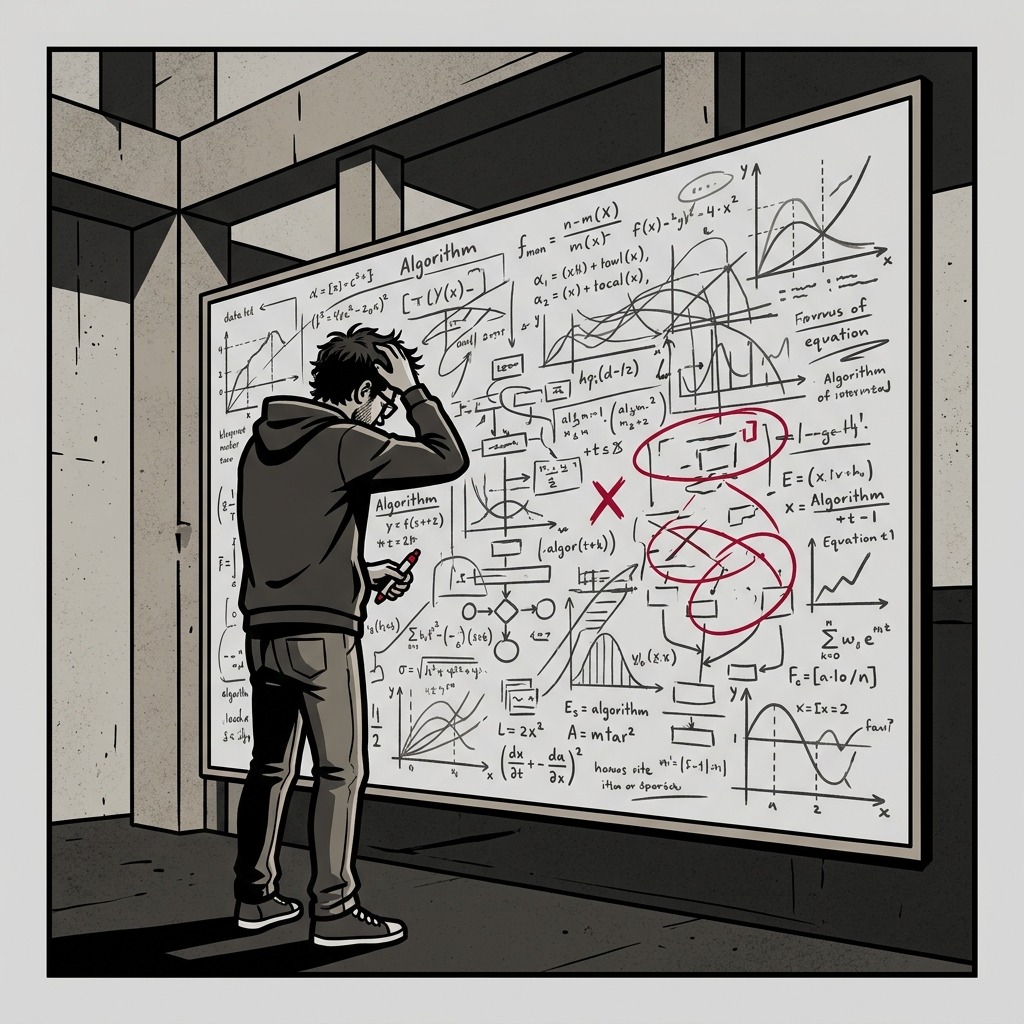
But why? Is the tech industry just overly sadistic? Are the questions completely disconnected from reality?
Well, yes and no. But complaining about the broken interview process won't get you hired. Instead, let's look at the hard data behind why failure is the default, and how you can systematically place yourself in the elite 10%.
The "Grind Illusion"
The biggest mistake I see candidates make is what I call the "Grind Illusion." They equate the number of hours spent solving random coding problems with their readiness for an interview.
They’ll proudly tell me, "I’ve done 300 problems!" But when I ask them to explain the difference between a Hash Map and a Trie in a practical scenario, they stare blankly.
Memorization is fragile under pressure. When the interviewer tweaks a standard problem just slightly, the memorized solution shatters.
The Real Reasons for Failure
If it's not a lack of practice, what is it? After analyzing hundreds of interview feedback forms, three core failure patterns emerge:
1. Jumping Straight to Code
We’ve all done it. The interviewer finishes explaining the problem, and silence fills the room. Feeling awkward, we immediately start writing code to show we're doing something.
This is a massive red flag. By coding before fully understanding the constraints, edge cases, and optimal approach, you're building a house on quicksand. You will inevitably hit a wall, and then you'll have to backtrack, which looks incredibly messy.
2. Silent Struggling
Interviewers aren't mind readers. If you're stuck and staring at the whiteboard in silence, they have no idea if you're close to a brilliant breakthrough or if your mind has completely blanked.
The technical interview is just as much a test of your communication skills as your coding skills. Can you articulate your thought process? Can you take a hint?
3. Ignoring the "Why"
"I'll use a Hash Set here." "Why?" "Because... it works?"
If you can't explain the time and space complexity trade-offs of your chosen data structure, you haven't really solved the problem. You've just guessed correctly.
Becoming the 10%
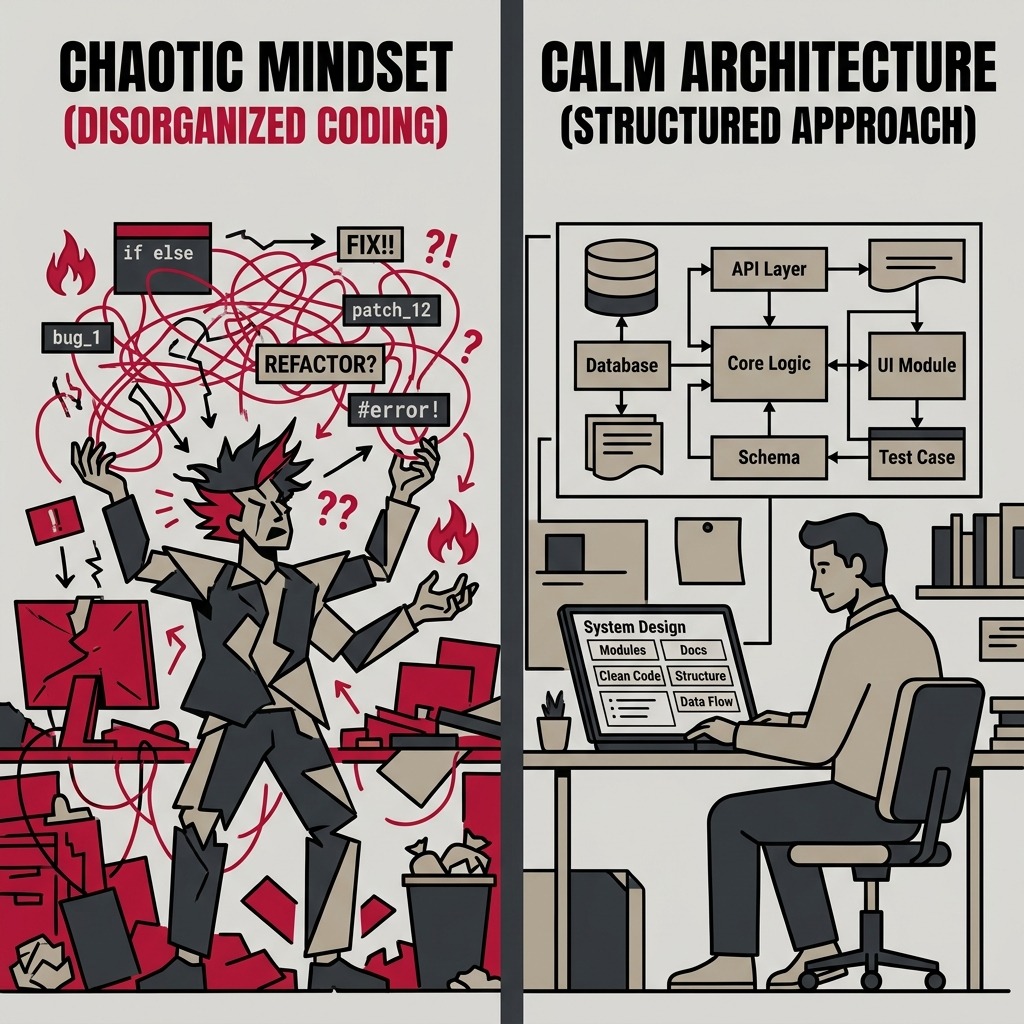
So, how do you break out of this cycle? It requires a fundamental shift in mindset. You have to move from a chaotic, "hack-it-together" approach to a calm, structured, architectural mindset.
The Framework for Success
Here’s the blueprint that the successful 10% use subconsciously:
- Clarify and Constrain: Spend the first 5 minutes just asking questions. What are the limits on the input? Are there negative numbers? What should we return if the input is empty? Write these constraints down.
- Think Out Loud: Treat the interviewer like a pair-programming partner. Say things like, "My initial thought is a brute-force approach using nested loops, which would be O(N^2), but I think we can optimize this to O(N) using a sliding window."
- Design Before Coding: Outline your logic in plain English or pseudo-code first. Get the interviewer's nod of approval before writing a single line of actual syntax.
- Test Your Logic: Before saying "I'm done," run through your code with a simple test case. Catching your own bugs is a huge positive signal.
- Turn the Tables in the Reverse Interview: Stand out in the final ten minutes by asking high-signal questions you should ask your interviewer to evaluate deployment pipelines and team culture.
- Autopsy Ghosted Loops: If you're confident in your code but hear radio silence, review why you're not getting callbacks after technical interviews to diagnose subtle communication and defensive design breakdowns.
It sounds simple, but under the pressure of a ticking clock and an evaluating gaze, it’s incredibly difficult to execute.
That's exactly why we built totop.app. We wanted to create an environment where you don't just practice coding, but you practice interviewing. By simulating the real pressure and forcing you to articulate your thoughts, you build the muscle memory required to stay calm and structured when it actually matters.
Stop grinding blindly. Start practicing with intention, focus on communication, and you'll find yourself walking out of those interviews with an offer in hand.