Customer Success Manager Interview Questions: 2026 Guide
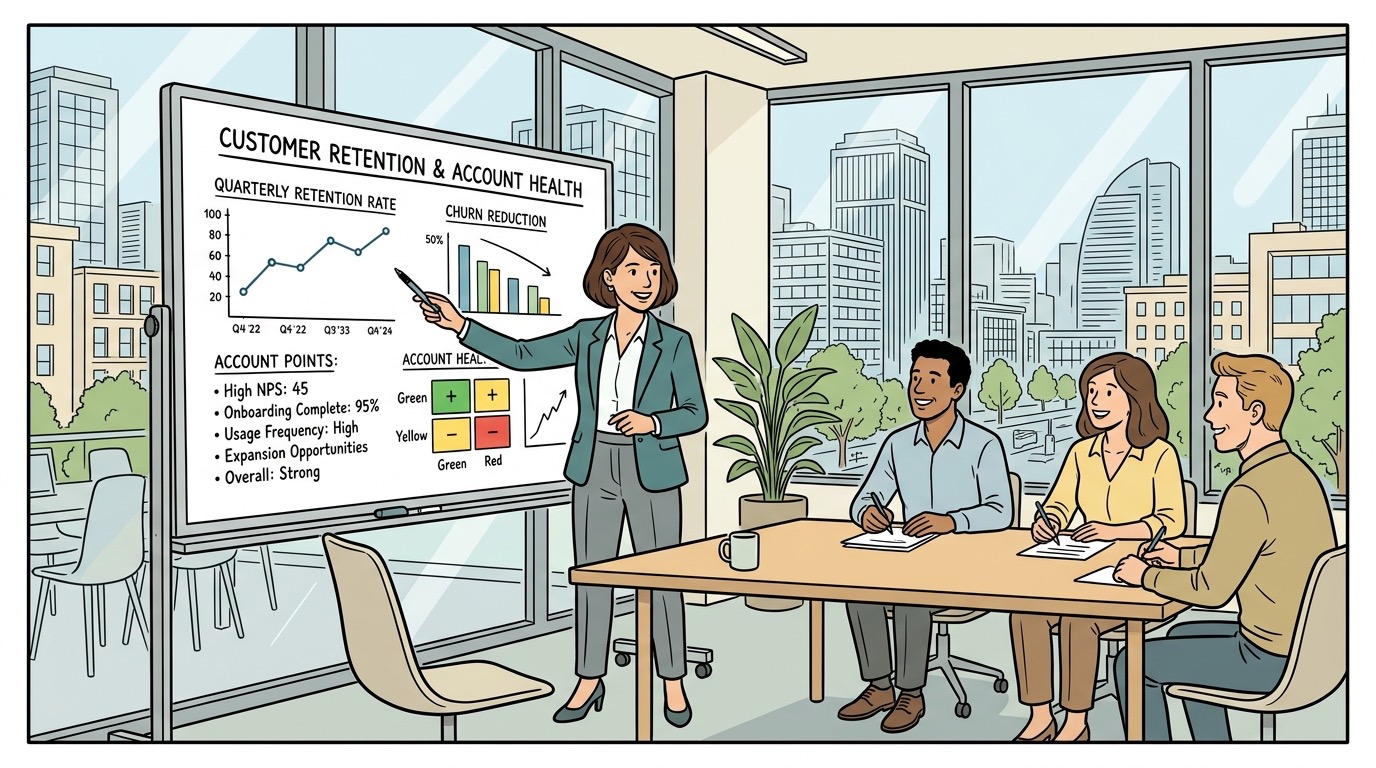
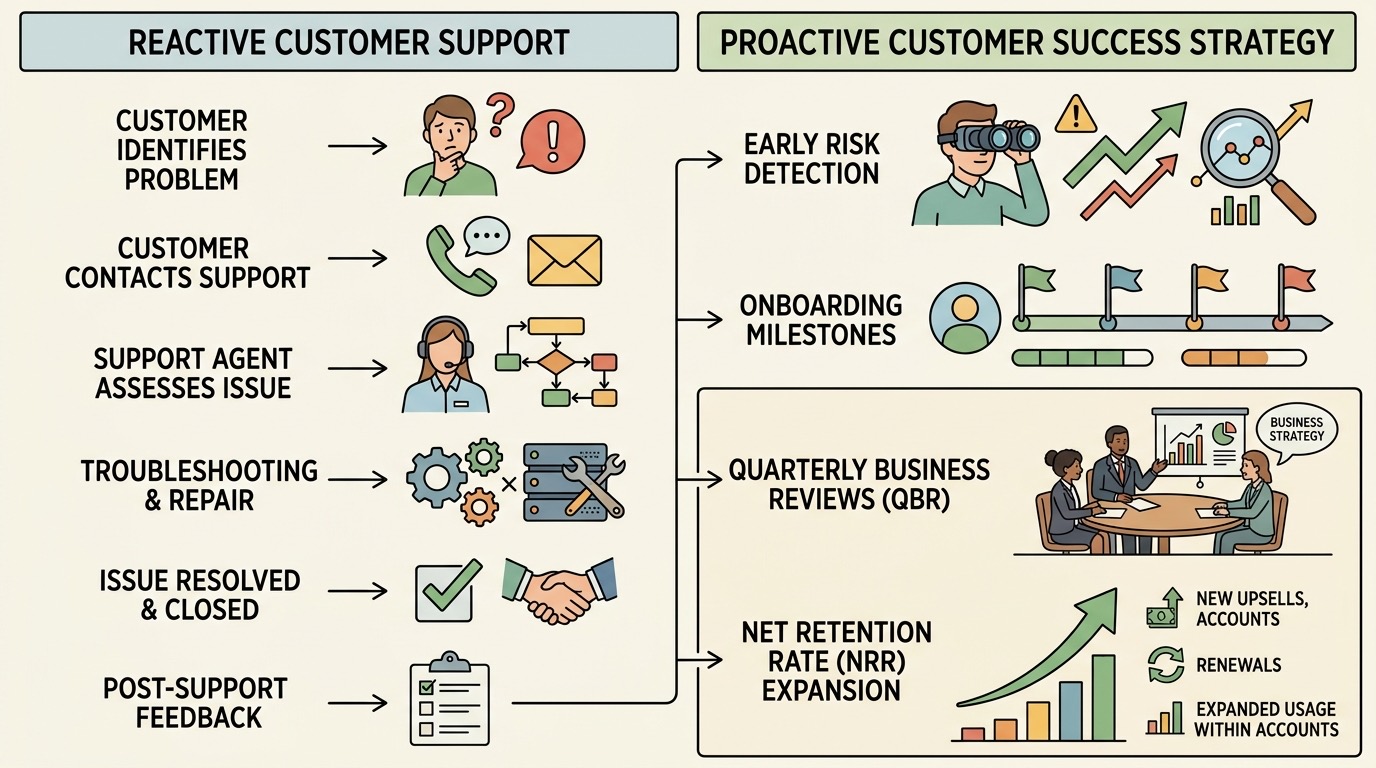
The role of a Customer Success Manager (CSM) has undergone a dramatic transformation. In the early days of SaaS, customer success was frequently mistaken for reactive customer support—answering support tickets, fixing onboarding snags, and soothing angry users. Today, executive teams view the CSM as a direct engine of revenue retention and account expansion.
When hiring managers evaluate candidates, they are not looking for someone who simply wants to make users happy. They are seeking strategic partners who understand Net Retention Rate (NRR), product telemetry, multi-threaded enterprise stakeholder relationships, and account churn mitigation.
Whether you are interviewing for an Associate CSM, Enterprise CSM, or Head of Customer Success position, this guide breaks down the essential customer success manager interview questions, tactical behavioral frameworks, and real-world scenarios you need to ace your interviews.
The Four Pillars of Modern CSM Interviews
Interviewers generally distribute questions across four core evaluation competencies:
- Strategic & Commercial Acumen: Understanding how customer health translates to gross retention rate (GRR), expansion ARR, and contract renewals.
- Onboarding & Time-to-Value (TTV): Structuring customer kickoff milestones and ensuring early product adoption.
- Escalation & Churn Defense: Managing difficult conversations, dissatisfied executive sponsors, and red-flag accounts.
- Cross-Functional Collaboration: Partnering with product, engineering, and sales teams to champion client needs without making unfulfillable roadmap promises.
1. Metric & Strategic Acumen Questions
Question 1: "How do you define a healthy account, and what leading indicators do you monitor?"
What the Interviewer Is Really Asking: Do you rely exclusively on lagging indicators like contract renewals, or do you proactively monitor user telemetry and engagement patterns to detect risks before the client initiates a cancellation conversation?
How to Structure Your Answer:
- Separate Leading vs. Lagging Indicators: Explain that renewal and NPS scores are lagging indicators. Leading indicators include Weekly Active Users (WAU), feature depth adoption, key workflow completion, and support ticket sentiment.
- Multi-Threaded Contact Depth: Highlight that an account is vulnerable if you only have a single champion. If your sole contact leaves the company, the account is immediately at risk.
- Quantified Health Scorecard: Describe how you synthesize license utilization, executive engagement, and support ticket velocity into an actionable green/yellow/red account health tier.
Sample Answer:
"I evaluate account health through a combination of product telemetry and relational depth. On the telemetry side, I monitor license utilization thresholds and critical feature adoption milestones. If an enterprise purchases 100 seats but only 40 are active past day 45, that is an immediate red flag. Relational health is equally important: I track contact breadth. A truly healthy account has active relationships across at least three tiers: the day-to-day power user, the operational team lead, and the economic buyer who holds budget authority."
Question 2: "What is your approach to Net Retention Rate (NRR) versus Gross Retention Rate (GRR)?"
What the Interviewer Is Really Asking: Do you understand the commercial metrics driving SaaS enterprise valuation, and do you know where a CSM's responsibilities begin and end when partnering with Account Executives?
Key Concepts to Mention:
- Gross Retention Rate (GRR): Measures churn and downgrades exclusively (cannot exceed 100%). It demonstrates how well your core product holds value.
- Net Retention Rate (NRR): Includes churn, contraction, and expansion (upsells, cross-sells, seat additions). High-performing SaaS organizations target 115% to 130%+ NRR.
- Alignment with Sales: While Account Executives frequently lead commercial negotiations, modern CSMs uncover expansion opportunities by identifying where client business goals outgrow their current tier. For a deeper perspective on how sales teams evaluate opportunity pipelines, check out our guide on sales interview questions and frameworks.
2. Real-World Scenario & Churn Prevention Questions
Question 3: "Walk me through how you handled an executive sponsor leaving an enterprise account."
What the Interviewer Is Really Asking: Sponsor turnover is the single most common cause of sudden enterprise churn. The interviewer wants to test your ability to re-establish value propositions under pressure.
Framework to Apply (The 4-Step Re-Anchoring Method):
- Immediate Discovery: Identify the interim point of contact and track down the incoming replacement through LinkedIn or existing internal champions.
- Value Summary Dossier: Prepare a concise one-page executive impact report detailing realized ROI, total hours saved, and ongoing initiatives.
- Alignment Meeting: Schedule a 30-minute introductory sync focused exclusively on the new leader's upcoming strategic goals and departmental KPIs, rather than just demoing features.
- Re-Contracting the Partnership: Align your software to the new executive's mandate to ensure your platform is viewed as an asset rather than legacy overhead.
Sample Answer:
"At my previous company, our primary economic buyer at a Fortune 500 account departed four months prior to an annual renewal. The new VP of Operations wanted to cut software vendor spend across the board. Rather than sending a generic check-in email, I built a bespoke Executive Impact Summary showing that their team had automated 1,200 manual workflow hours in the preceding two quarters, delivering an estimated
40,000 in labor savings. During our introductory meeting, I asked about her key initiatives for the fiscal year and demonstrated how our roadmap directly supported her consolidation goals. By anchoring our platform to her objectives, we preserved the account and secured a multi-year renewal."
Question 4: "A customer threatens to churn unless you deliver an unreleased custom feature immediately. How do you respond?"
What the Interviewer Is Really Asking: Can you maintain a firm, professional boundary without alienating the client or throwing your product and engineering teams under the bus?
Tactical Steps:
- Acknowledge and Validate: De-escalate the tension by validating their operational frustration.
- Uncover the Root Problem (The 'Five Whys'): Frequently, a feature request is just the customer's guessed solution to an underlying workflow bottleneck that can be resolved with existing tools or integrations.
- Transparent Communication: If the feature is genuinely outside roadmap scope, explain the reasoning honestly without false promises. If you encounter complex technical edge cases during the discussion, utilizing strategies from our breakdown on handling questions when you do not know the answer can protect your credibility.
3. Onboarding & Quarterly Business Review (QBR) Questions
Question 5: "How do you prepare for and run an impactful Quarterly Business Review (QBR)?"
What the Interviewer Is Really Asking: Do your QBRs consist of boring slide decks reciting historical usage data, or do you run forward-looking strategic sessions that executives actually want to attend?
The Winning QBR Structure:
Agenda Phase Time Allocation Core Focus Executive Value Recap First 10 Minutes Review agreed-upon business outcomes and quantify delivered ROI. Current Performance & Wins 10 Minutes Celebrate team milestones, power user recognition, and system health. Future Strategic Roadmap 15 Minutes Unpack upcoming client initiatives and demonstrate product roadmap alignment. Actionable Next Steps Last 10 Minutes Establish specific mutual accountability milestones for the next quarter. Pro Tip: Never use QBRs as surprise troubleshooting sessions. If there are unresolved operational bugs, handle them in advance with support and engineering leads so the executive meeting remains focused on high-level strategy. This collaborative mindset mirrors how cross-functional leaders operate in our review of marketing manager interview frameworks.
Behavioral Interview Strategies for CSMs
During customer success behavioral interviews, hiring teams evaluate your emotional intelligence, resilience, and problem-solving composure. You will face classic behavioral prompts such as:
- "Tell me about a time an onboarding project fell behind schedule."
- "Describe a situation where a customer was openly hostile during a call."
- "Give an example of a creative workaround you devised to solve a client limitation."
When responding to these prompts, structure your answers using the STAR Method (Situation, Task, Action, Result). Quantify your results wherever possible—cite percentages of churn reduced, days shaved off onboarding, or expansion pipeline generated.
If you are structuring a multi-week interview preparation plan, following a disciplined timeline like our 30-day interview prep roadmap ensures you allocate sufficient practice to both behavioral storytelling and scenario simulations.
Summary Checklist: Acing Your CSM Interview
Before your final round, make sure you can confidently articulate:
- Your formula for calculating and driving Net Retention Rate (NRR).
- Your method for tracking leading telemetry indicators versus lagging metrics.
- Your step-by-step playbook for defending against executive sponsor turnover.
- A repeatable framework for running high-impact Executive QBRs.
- Clear examples of partner management across sales, engineering, and product.
Practice Realistic Client Scenarios with AI
The most challenging part of any customer success interview is thinking on your feet when the interviewer poses unexpected client objections or demanding role-play scenarios.
With totop.app, you can practice interactive, job-specific mock interviews powered by realistic AI hiring managers. Choose tailored scenarios—from difficult churn negotiations to enterprise onboarding reviews—and receive instant diagnostic feedback on your communication structure, composure, and commercial framing before you step into the real interview room.