Financial Analyst Interview Questions: The Complete Prep Guide (Technical + Behavioral)
You're sitting in a glass-walled conference room—or maybe staring at a Zoom window—waiting for the interviewer to join. Your Excel shortcuts are committed to muscle memory, and you've memorized the formulas. But as the cursor blinks, a familiar knot forms in your stomach: Will they ask me to build a DCF from scratch? How do I explain that one time a project went sideways without sounding like a disaster?
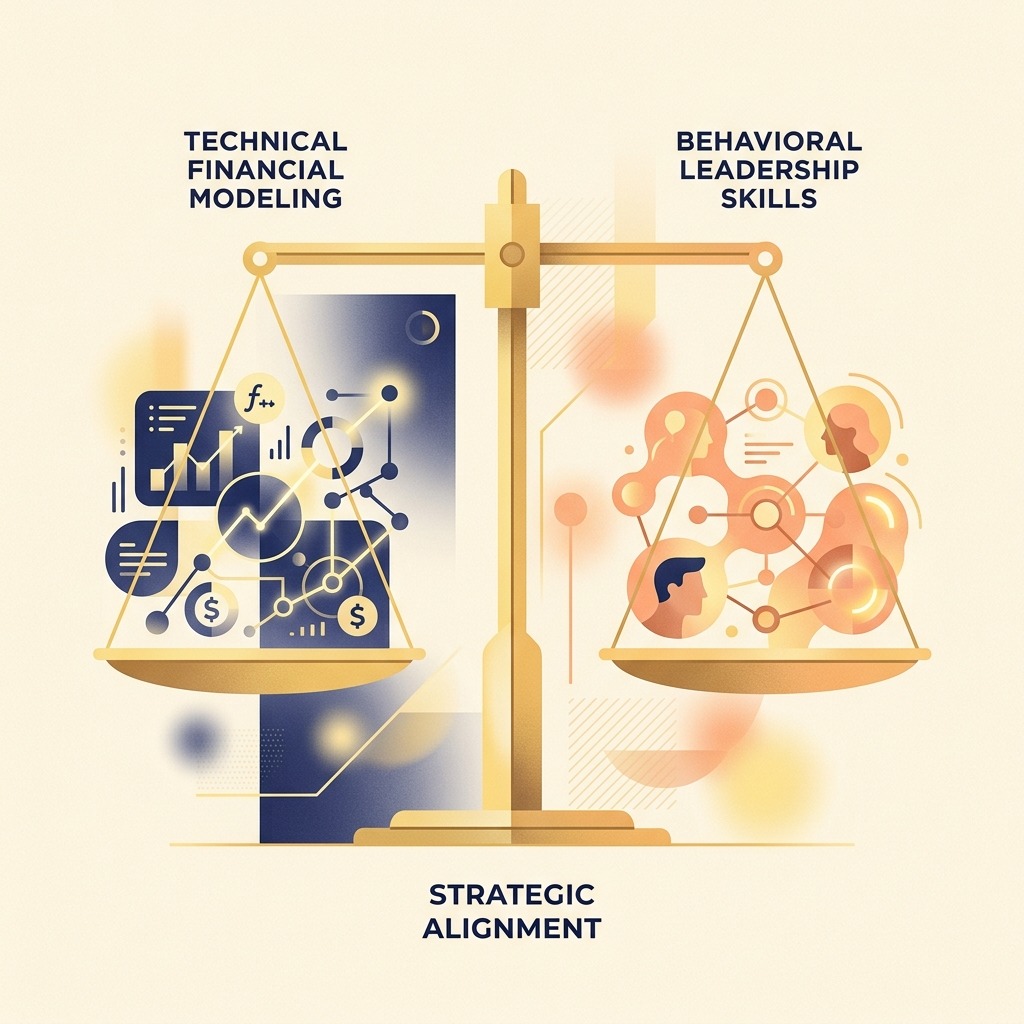
Preparing for a financial analyst interview can feel like studying for two completely different jobs. On one hand, you need the mathematical rigor to build valuation models and dissect three-statement connections. On the other hand, you need the communication skills to translate those numbers into a strategic story for stakeholders who might not know the difference between EBITDA and operating income.
This guide bridges that gap. We will break down the exact technical concepts you'll be tested on, walk through the behavioral questions designed to test your sanity under pressure, and show you how to tie them together to stand out.

Part 1: The Technical Gauntlet (Hard Skills)
Interviewer expectations vary depending on the role, but every financial analyst candidate must master three core areas: financial statement analysis, valuation methodologies, and financial modeling interview questions and best practices.
1. Connecting the Three Financial Statements
This is the most common technical screen. An interviewer wants to see if you understand how money actually flows through a business, not just how to read a balance sheet in isolation.
The Classic Question: "Walk me through how a 0 increase in depreciation flows through the three statements."
Here is how you structure your answer step-by-step:
- Income Statement: Depreciation is an expense, so operating income (EBIT) decreases by
0. Assuming a 20% tax rate, net income drops by $8 (
0 minus the
tax shield).
- Cash Flow Statement: Net income at the top drops by $8. However, depreciation is a non-cash expense, so you add back the
0. Net cash flow from operations increases by
.
- Balance Sheet: Cash on the assets side is up by
0 due to the depreciation. Total assets are down by $8. On the liabilities and equity side, retained earnings (part of shareholders' equity) drops by $8 because of the lower net income. Both sides balance perfectly at -$8.
2. Valuation Methodologies
You should know the three primary ways to value a company and when to use each.
- Comparable Companies (Comps): A relative valuation method comparing the target company's metrics (like P/E ratio, EV/EBITDA) to public peers. It's quick and reflects real-time market sentiment, but no two companies are truly identical.
- Precedent Transactions: Looking at historical M&A deals involving similar companies. This usually yields the highest valuation because it includes a "control premium" (the extra price paid to acquire a company).
- Discounted Cash Flow (DCF): An intrinsic valuation method based on the present value of the company's projected future free cash flows. It's highly detailed but incredibly sensitive to assumptions (like the discount rate/WACC and terminal growth rate).

3. Key Financial Metrics to Know
Make sure you can talk comfortably about these indicators beyond their basic definitions:
- EBITDA: Earnings Before Interest, Taxes, Depreciation, and Amortization. A quick proxy for operational profitability, though it ignores capital expenditure.
- Free Cash Flow (FCF): The actual cash a company generates after accounting for capital expenditures. This is what's left to pay down debt, distribute dividends, or reinvest.
- Working Capital: Current assets minus current liabilities. It tells you if the company has enough short-term liquidity to run its day-to-day operations.
Part 2: The Behavioral Screen (Soft Skills)
Many candidates fail not because they messed up a formula, but because they treated the behavioral round as an afterthought. Companies aren't just hiring calculators; they are hiring teammates, advisors, and future leaders.
You need to show that you can handle tight deadlines, communicate complex ideas to non-finance stakeholders, and own up to mistakes.
Formatting Your Answers: The STAR Method
For every behavioral question, structure your story using the STAR method:
- Situation: Describe the context or challenge.
- Task: Explain what you were responsible for.
- Action: Detail the steps you personally took to resolve it.
- Result: Share the positive outcome (quantified with data whenever possible).
Tricky Behavioral Questions & How to Approach Them
Question 1: "Describe a time you found an error in your own analysis after submitting it. What did you do?"
- What they're testing: Integrity and composure. Everyone makes mistakes; what matters is how you handle the fallout.
- The Right Approach: Don't try to hide it or blame the data source. Walk through how you spotted the mistake, immediately notified your manager with a corrected version already prepared, and implemented a double-check template to ensure it wouldn't happen again.
Question 2: "How do you explain complex financial data to a non-finance team?"
- What they're testing: Communication and translation. Can you speak "business" instead of just "finance"?
- The Right Approach: Explain how you strip away jargon (like NPV or WACC) and focus on the strategic impact. Use visual aids like simplified dashboards and relate the metrics back to the team's specific goals—for instance, explaining how inventory turnover directly impacts marketing budgets.
Part 3: The Roadmap to Acing the Interview
Knowing the answers is only half the battle. You have to deliver them confidently. Here's a practical checklist to help you prepare in the days leading up to your interview:
- Build a "Story Bank": Have 4 to 5 versatile behavioral stories ready that you can adapt to different questions (a time you handled conflict, a time you worked under a tight deadline, a project you're proud of).
- Speak Out Loud: Don't just read answers silently. Practice explaining DCF assumptions or statement linkages out loud. If you sound natural, the interviewer will trust your expertise.
- Use Interactive Tools: To get comfortable with the pressure of a real interview, use resources like totop.app. Engaging in interactive mock tests forces you to structure your answers on the spot and helps you identify where your explanations might sound a bit shaky.
A great financial analyst is more than an Excel wizard. They are the strategic guides of a business. Show them you have the math down, but more importantly, show them you know how to make that math matter. Good luck out there!