Top Docker & Kubernetes Interview Questions You Need to Know
Have you ever walked into a DevOps or Cloud Engineering interview feeling prepared, only to be hit with a hyper-specific Kubernetes networking question that completely throws you off? I've been there. The landscape of containerization and orchestration is vast, and knowing the theoretical difference between Docker and Kubernetes isn't enough anymore. Interviewers want to know you can handle real-world deployments.
In this guide, we're diving deep into the most common and challenging Docker and Kubernetes interview questions. Whether you're aiming for a junior role or a senior architecture position, mastering these concepts will give you the confidence to ace your next tech interview. Let's break down the complexities together.

Docker: The Foundation of Containerization
Before we orchestrate, we need something to orchestrate. Docker remains the industry standard for containerizing applications. Here are the core questions you're likely to face.
1. What is the fundamental difference between a Container and a Virtual Machine (VM)?
This is the classic warm-up question. Don't just give a textbook definition; explain the practical implications.
How to answer: "The key difference lies in the architecture and resource utilization. A VM runs a full guest operating system with virtualized hardware on top of a hypervisor. It's heavy and takes time to boot. A container, on the other hand, shares the host's operating system kernel. It only packages the application and its direct dependencies. This makes containers incredibly lightweight, fast to start, and highly portable. I remember migrating a legacy app to Docker and being amazed at how much overhead we reduced just by dropping the guest OS layer."
2. How does Docker handle data persistence?
Interviewers ask this because containers are ephemeral by nature. If a container dies, its local data dies with it.
How to answer: "Because containers are designed to be stateless and ephemeral, data created inside them is lost when they are destroyed. To persist data, Docker provides Volumes and Bind Mounts. I primarily use Docker Volumes because they are managed entirely by Docker, making them easier to back up and migrate. Bind mounts link a specific path on the host to the container, which is useful for local development but can cause portability issues in production."
3. Explain the Docker build cache and how you optimize a Dockerfile.
This tests your practical experience. Anyone can write a basic Dockerfile, but writing an efficient one requires understanding layers.
How to answer:
"Each instruction in a Dockerfile creates a new image layer. Docker caches these layers to speed up subsequent builds. To optimize, I always order commands from least frequently changed to most frequently changed. For example, I copy the package.json and run npm install before copying the rest of the application code. This ensures that if I only change a JavaScript file, Docker uses the cached node_modules layer, dramatically speeding up the CI pipeline. I also heavily rely on multi-stage builds to keep the final production image small and secure."
Kubernetes (K8s): Orchestrating the Chaos
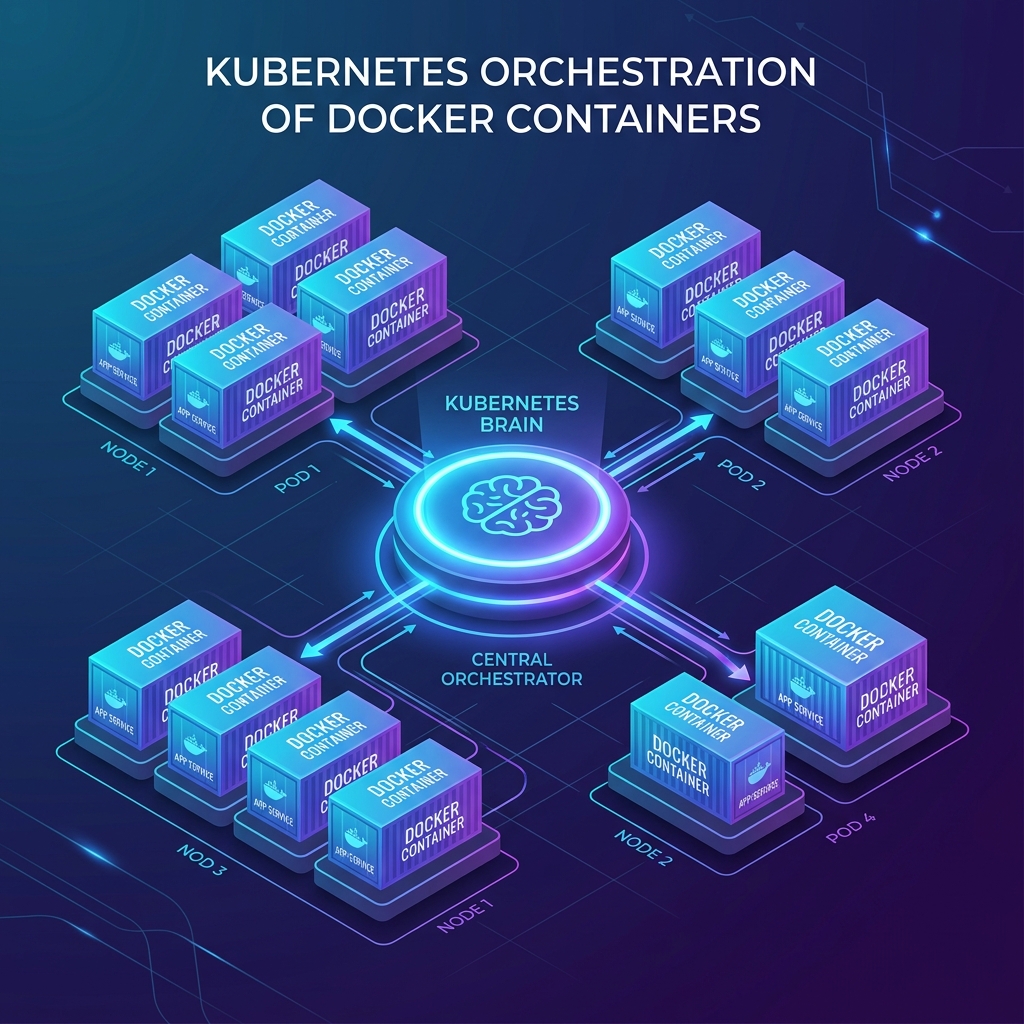
Once you have dozens or hundreds of containers, you need Kubernetes. K8s questions often focus on architecture, self-healing, and networking.
4. What are the core components of the Kubernetes Control Plane?
You need to demonstrate that you understand how Kubernetes actually works under the hood.
How to answer: "The Control Plane is the brain of the cluster. Its main components are:
- kube-apiserver: The front end of the control plane; everything communicates through it.
- etcd: A highly available key-value store that holds all cluster data and state.
- kube-scheduler: Watches for new Pods without assigned nodes and selects a node for them based on resource requirements.
- kube-controller-manager: Runs controller processes (like Node controller, Job controller) that regulate the state of the cluster, striving to match the current state to the desired state. Understanding these parts helped me troubleshoot a major cluster outage last year when our etcd database became unresponsive."
5. Explain the difference between a Deployment and a StatefulSet.
This is a critical distinction that separates beginners from experienced engineers.
How to answer: "Deployments are perfect for stateless applications. They ensure a specified number of identical Pod replicas are running and handle rolling updates easily. The Pods are interchangeable. StatefulSets, however, are for stateful applications like databases. They provide unique network identifiers and stable, persistent storage for each Pod. If a Pod in a StatefulSet dies, its replacement will have the exact same name and connect to the same persistent volume. You wouldn't want to run a Cassandra database as a standard Deployment!"
6. How does Service discovery work in Kubernetes?
Networking in Kubernetes can be tricky, so expect questions on how Pods find each other.
How to answer:
"Kubernetes uses Services to expose applications running on a set of Pods. Since Pod IP addresses change dynamically when they are recreated, relying on IPs is impossible. A Service provides a single, stable IP address and a DNS name for a logical set of Pods. CoreDNS (the default DNS server in K8s) automatically creates DNS records for these Services. So, the frontend app simply calls http://backend-service:8080, and Kubernetes routes the traffic to an available backend Pod."

Preparing for the Deep Dive
While these questions cover the fundamentals, be prepared for scenario-based follow-ups. Interviewers might ask: "A Pod is in a CrashLoopBackOff state. Walk me through exactly how you would debug it." (Hint: Start with kubectl describe pod and kubectl logs). For a full breakdown of production debugging workflows and incident triage, read our guide to site reliability engineer interview questions.
The key to acing these interviews is not just memorizing definitions, but sharing stories of how you've used these technologies to solve real problems, improve deployments, or recover from disasters.
If you are looking to sharpen your skills further and practice these scenarios in a simulated environment, platforms like totop.app offer excellent resources to test your knowledge and get you interview-ready. Good luck, and keep building!