Top AWS Interview Questions Every Cloud Engineer Should Know in 2026
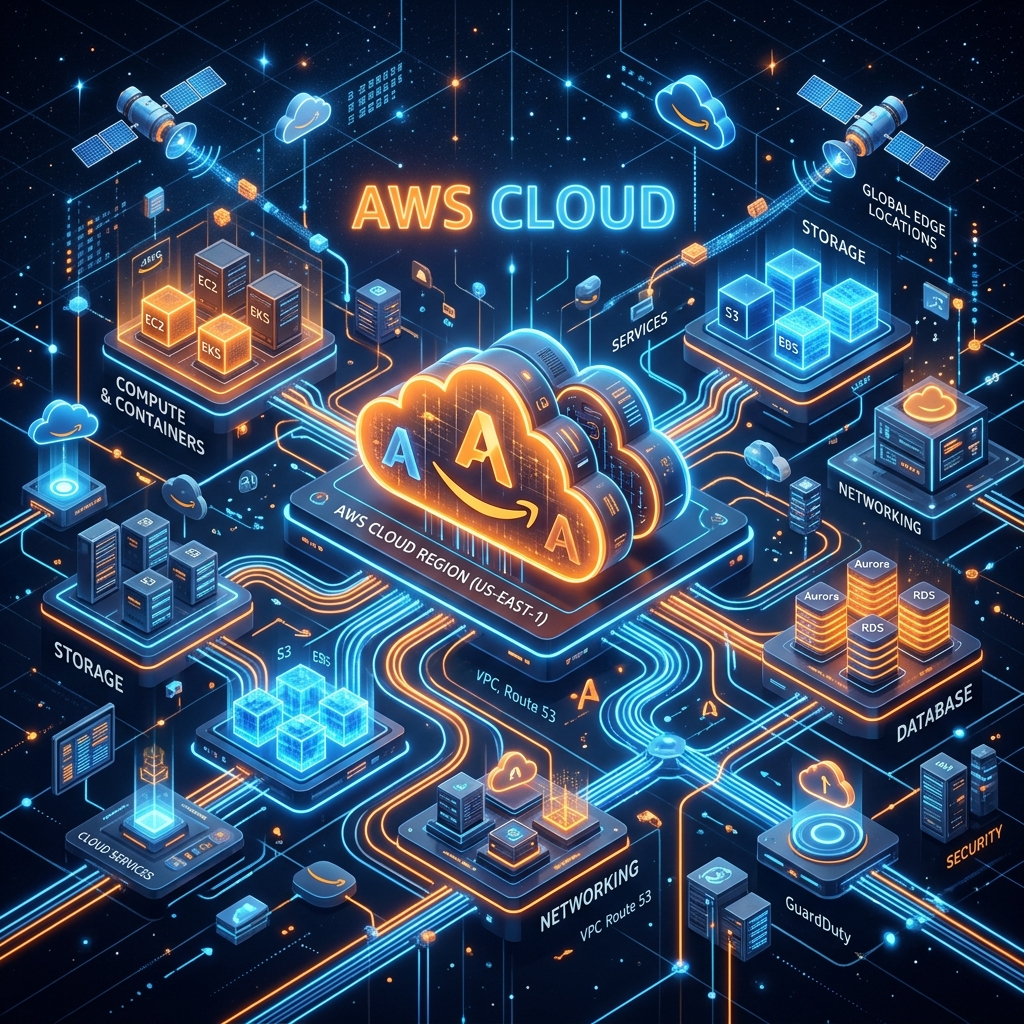
I remember sitting in my very first AWS engineering interview years ago, feeling my heart pound as the interviewer asked me about the differences between an Application Load Balancer and a Network Load Balancer. I’d studied for weeks, read all the whitepapers, and practiced building out VPCs. But in the heat of the moment? The theory and practice blurred.
If you're gearing up for a Cloud Engineer interview focused on AWS, you’ve probably felt that exact same pressure. With the cloud landscape evolving so quickly, the questions have shifted from basic definitions to complex, scenario-based system design challenges.
Let's break down some of the most critical AWS interview questions you’re likely to face, what interviewers are really looking for, and how to nail your answers.
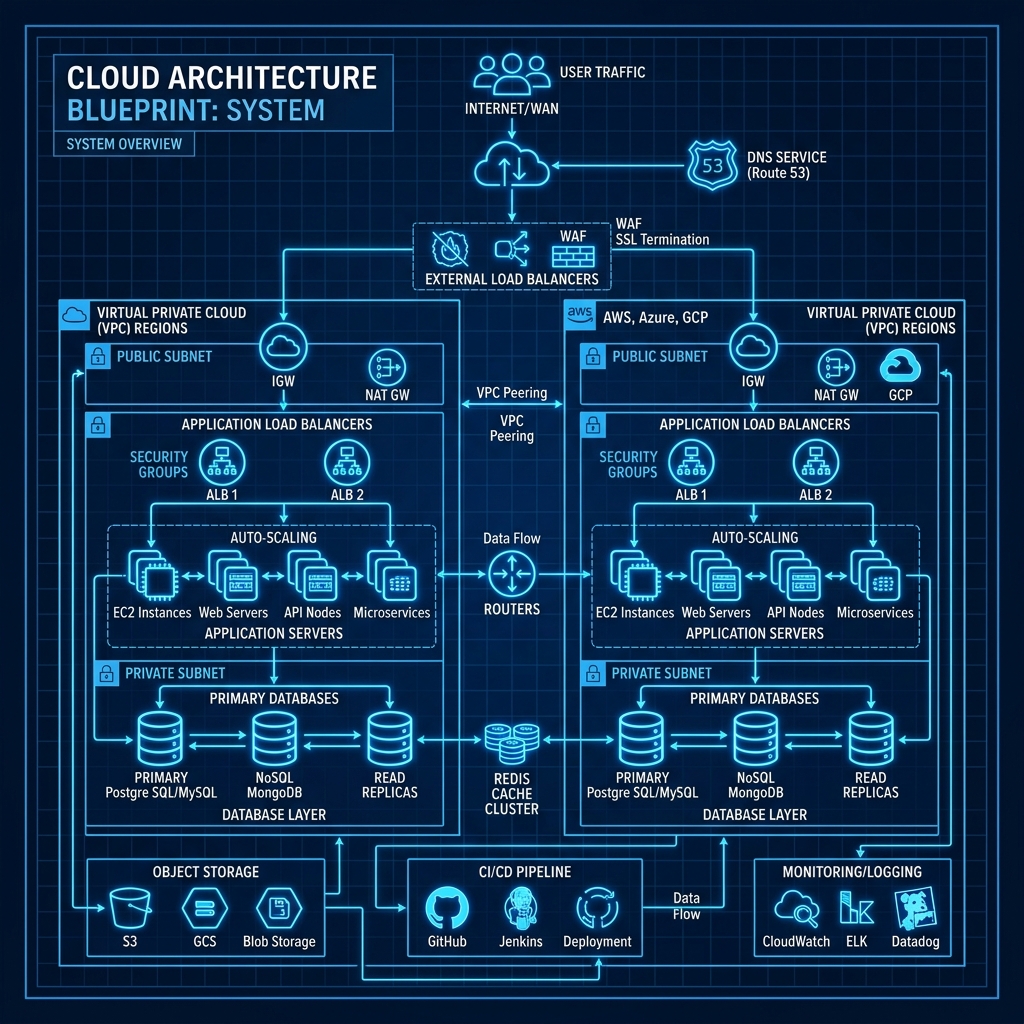
1. The Classic: "How would you design a highly available, scalable web architecture on AWS?"
This is the bread and butter of cloud engineering. They don’t just want to hear a list of services; they want to see how you connect them securely and efficiently.
How to answer: Start from the user's perspective and work your way back.
- Mention Route 53 for DNS routing.
- Talk about a Content Delivery Network (CDN) like CloudFront for caching static assets.
- Move into the VPC. Discuss having public subnets for your Application Load Balancers (ALBs) and private subnets for your EC2 instances (or ECS/EKS clusters) and databases.
- Emphasize Auto Scaling Groups across multiple Availability Zones (AZs) for high availability.
- Don't forget the data layer! Mention Amazon RDS with Multi-AZ deployments for failover, and maybe ElastiCache for database query caching.
Pro tip: Throw in a mention of AWS WAF (Web Application Firewall) attached to the ALB or CloudFront to show you’re thinking about security, not just uptime.
2. "Explain the differences between S3 Standard, S3 Intelligent-Tiering, and S3 Glacier."
Storage costs can spiral out of control if you're not careful. This question tests your practical experience with cost optimization, a core pillar of the AWS Well-Architected Framework.
How to answer:
- S3 Standard: This is your go-to for frequently accessed data. It offers low latency and high throughput.
- S3 Intelligent-Tiering: Mention this when data access patterns are unknown or unpredictable. I usually explain how it automatically moves objects between access tiers based on changing access patterns, saving money without operational overhead.
- S3 Glacier (and Glacier Deep Archive): This is for archival data where retrieval times of minutes to hours are acceptable.
3. "We are experiencing high latency connecting to our RDS instance. How would you troubleshoot this?"
Interviewers love troubleshooting questions. They want to see your analytical process.
How to answer: Walk them through your debugging mindset.
- Metrics first: Say you’d check CloudWatch metrics for the RDS instance. Are CPU utilization, IOPS, or database connections maxed out?
- Network path: Is there a network bottleneck? Are the application and database in the same Region/AZ?
- Database specifics: Look into Slow Query Logs. Are there missing indexes causing full table scans?
- Caching: Ask if there's a caching layer (like ElastiCache/Redis). If every read hits the primary database, implementing a cache could drastically reduce latency.
4. "How do you manage infrastructure as code (IaC)?"
If you're clicking around in the AWS Management Console to deploy production resources, that's a massive red flag.
How to answer: Talk about your tool of choice, whether it's AWS CloudFormation, Terraform, or the AWS CDK (Cloud Development Kit). Be honest about what you know.
- Highlight the importance of version control (Git) for your infrastructure.
- Discuss state management (especially if you use Terraform).
- Mention CI/CD pipelines. How do your infrastructure changes get tested and deployed safely?
Wrapping Up
Technical knowledge is only half the battle. The other half is communicating your thought process clearly under pressure. Practice explaining these concepts out loud, ideally to a peer or a mentor. To see how cloud reliability translates to live on-call operations and error budgets, dive into our site reliability engineer interview questions guide.
And if you want a realistic environment to practice these exact scenarios and get instant, actionable feedback, definitely check out totop.app. It’s been a game-changer for candidates looking to refine their system design explanations and gain the confidence needed to crush their cloud engineering interviews.
Good luck out there! You've got this.