Python vs JavaScript: Interview Question Differences
If you’re stepping into the tech interview arena, you’ve probably noticed that the vibe changes entirely depending on the language you're interviewing for. I remember walking into a JavaScript interview armed with deep algorithmic knowledge, only to be hammered on event loops and closure scopes. The next week? A Python interview where the focus was entirely on memory management and generators.
Have you ever noticed how different the expectations are? Let's break down exactly what interviewers are looking for when comparing Python and JavaScript.
1. The Typing Tug-of-War: Dynamic vs. Coercion
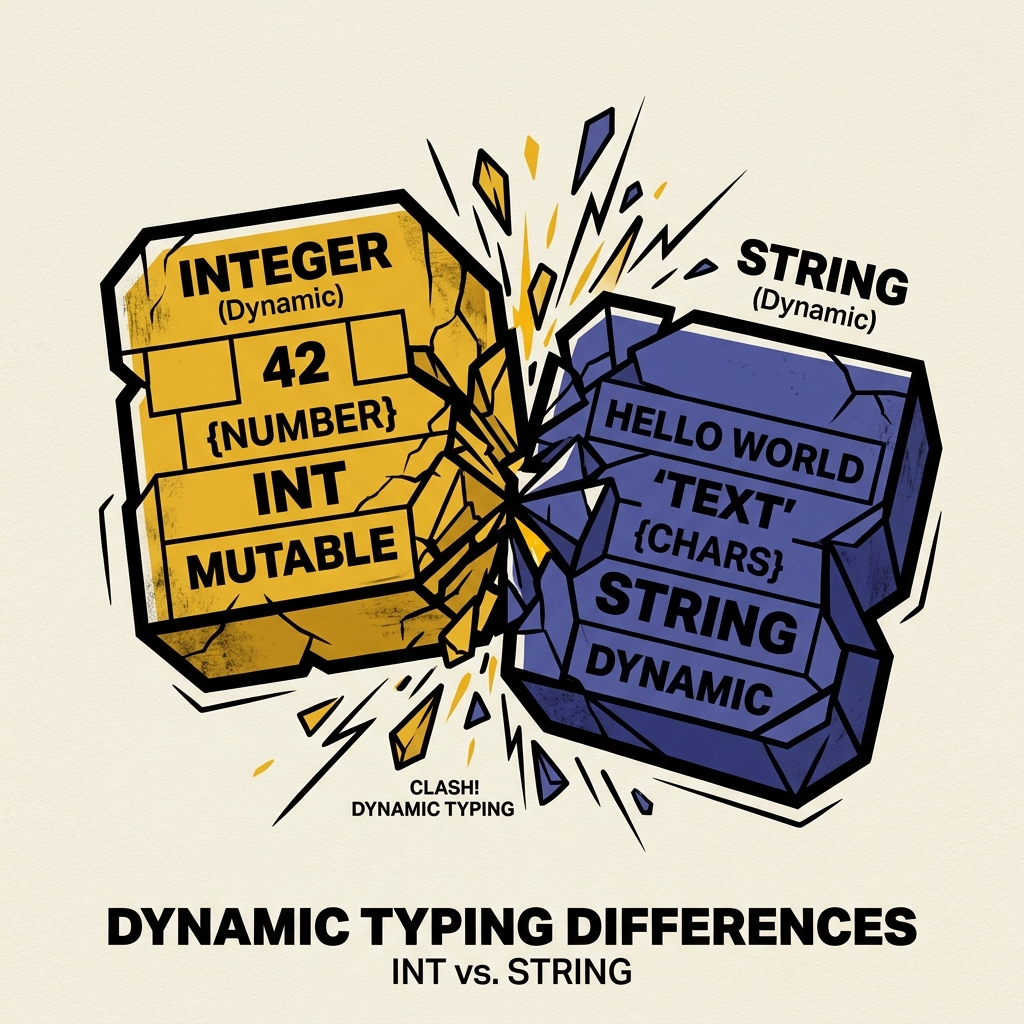
Both Python and JavaScript are dynamically typed, but they behave very differently when you actually start pushing them.
In Python, typing is strongly enforced at runtime. If you try to add a string to an integer ("5" + 5), Python will throw a TypeError right in your face. It expects you to be explicit.
JavaScript, on the other hand, is infamous for its loose typing and type coercion. If you try the same thing in JS, it will cheerfully give you "55". Interviewers love to test this.
Common JS Interview Question:
"What is the difference between
==and===?" You'll need to explain how==performs type coercion while===checks both value and type.
Common Python Interview Question:
"What's the difference between a list and a tuple, and when would you use one over the other?" Here, they want to see your understanding of mutability and memory efficiency, not coercion.
2. Concurrency: The Event Loop vs. Asyncio
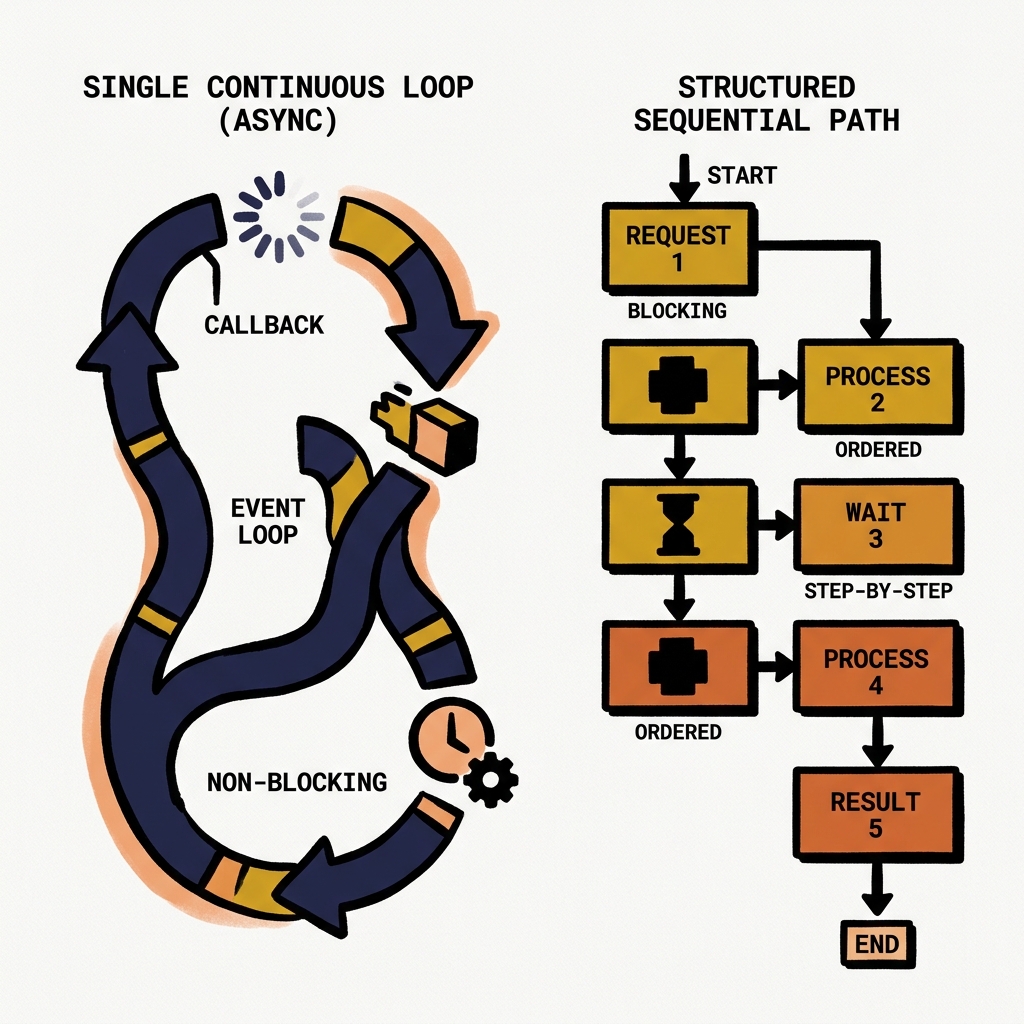
This is perhaps the biggest divide. JavaScript was built for the browser, meaning it had to handle user interactions without freezing the page. Hence, its single-threaded, non-blocking Event Loop.
Python wasn't originally designed for this. While it has asyncio now, its approach is more structured and often requires you to explicitly yield control. Plus, there's the infamous Global Interpreter Lock (GIL) to discuss.
Common JS Interview Question:
"Explain the Event Loop. How do the Call Stack, Web APIs, and Task Queue interact?" If you can't whiteboard this, you're toast in a senior JS interview.
Common Python Interview Question:
"What is the GIL, and how does it affect multithreading in Python?" They want to know if you understand that Python threads don't actually run simultaneously for CPU-bound tasks.
3. Object-Oriented Quirks
Object-oriented programming (OOP) in these languages feels like they were built on different planets.
Python uses a classical inheritance model that feels intuitive if you're coming from Java or C++, complete with multiple inheritance and "magic methods" (like __init__ and __str__).
JavaScript uses Prototypal Inheritance. Instead of classes inheriting from classes, objects inherit directly from other objects. Even though ES6 introduced the class keyword, it's just syntactic sugar over prototypes.
Common JS Interview Question:
"How does prototypal inheritance work? What is the prototype chain?"
Common Python Interview Question:
"How does multiple inheritance work in Python? What is the Method Resolution Order (MRO)?"
Wrapping Up
Preparing for an interview in either language requires a mental shift. JavaScript interviews will heavily index on language quirks, asynchronous execution, and closures. Python interviews tend to focus more on data structures, the "Pythonic" way of writing clean code, and memory management.
Whichever you're preparing for, practice makes perfect. Head over to totop.app to sharpen your skills with our interactive interview scenarios, tailored specifically for the language you're targeting.
Good luck out there!